

Ecommerce SEO
Guide to Rich Snippets Products: Boost CTR in 2026
Learn to implement rich snippets products to boost CTR & visibility. Our 2026 guide covers JSON-LD, testing, and common eCommerce pitfalls for success.
Jun 13, 2026
Read More
A deep dive into technical, content, and conversion strategies to rank your product pages and scale your eCommerce organic growth.

Quick answers to common questions.
Learn to implement rich snippets products to boost CTR & visibility. Our 2026 guide covers JSON-LD, testing, and common eCommerce pitfalls for success.
Jun 13, 2026

Create powerful tone of voice guidelines for e-commerce. Define, document, & scale your brand voice for product copy, SEO, and AI success.
Jun 11, 2026

Explore 10 actionable writing strategy examples for eCommerce. Learn SEO-first content, storytelling, and data-driven methods to boost traffic and sales.
Jun 10, 2026
Product detail pages (PDPs) are the most critical assets in your digital catalog. They represent the final step in the customer journey where search intent meets conversion. Mastering ecommerce SEO for product pages requires treating these URLs as bottom of funnel assets designed to capture users who are ready to purchase.
Historically, ecommerce brands focused their SEO efforts entirely on category pages. The logic was simple: rank a category page for a broad term, and let the user browse. However, modern search engine algorithms and shifting consumer behaviors have changed this dynamic. Shoppers now use highly specific, long tail queries. They do not just search for "running shoes". They search for "Nike Air Zoom Pegasus 39 black size 10". When a user types a query with that level of granularity, sending them to a broad category page introduces friction. Sending them directly to an optimized product detail page results in a seamless experience and a much higher probability of a transaction.
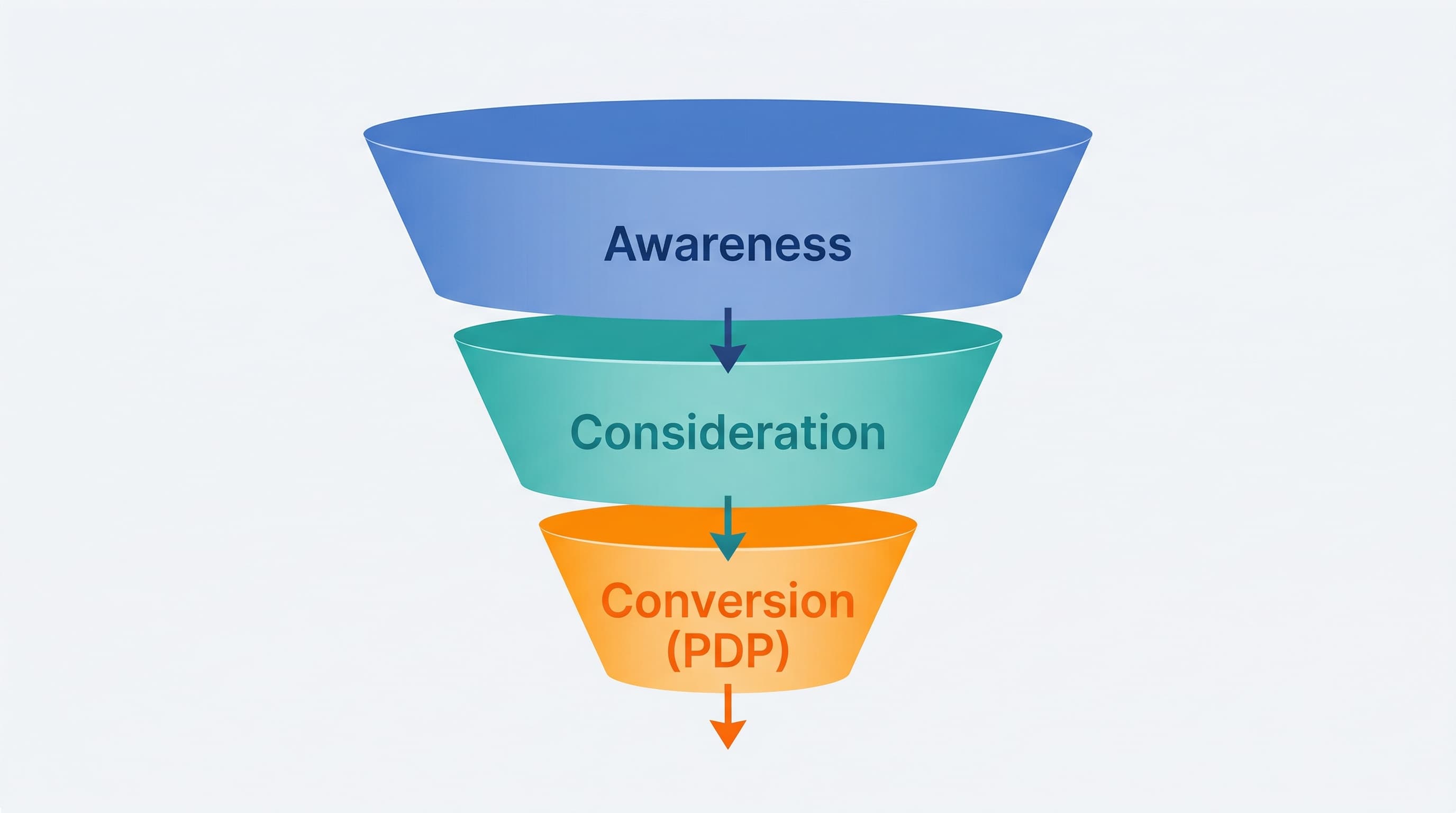
Optimizing your product pages is a direct investment in your bottom line. Industry data indicates that organic search drives approximately 53 percent of all website traffic. Because product specific queries carry high transactional intent, they often yield conversion rates between 2.5 percent and 3.5 percent. This is significantly higher than the conversion rates of generic top of funnel searches. Ranking for specific model names, SKU codes, or unique product attributes through effective product page SEO ensures you attract buyers rather than just casual browsers. Every incremental improvement in your PDP rankings translates directly into recognizable revenue growth.
A high ranking PDP must satisfy both search engine bots and human shoppers. This balance is achieved by providing structured technical data alongside a seamless, engaging user experience. To align your site with ecommerce product page SEO best practices, follow these steps to define and capture search intent:
First, identify high intent terms. Focus on phrases like price, discount, review, or specific SKU numbers during your keyword research phase. These modifiers signal that the user has moved past the consideration phase.
Second, analyze SERP features. Check if Google displays shopping ads, popular products carousels, or rich review snippets for your target terms. This tells you exactly what kind of data Google expects to find on your page.
Third, audit your technical data layer. Use a Shopify product metafields generator to help crawlers understand complex product specs without cluttering the user interface. Shopify metafields allow you to store extra structured information that a standard product setup might not support, which is critical for granular SEO optimization.
By following this strategic approach, you effectively optimize product pages to turn search visibility into actual transactions. High quality product descriptions remain the cornerstone of this dual optimization strategy, ensuring both relevance for the algorithms and persuasion for the human buyer.
A beautiful product page will not rank if search engines cannot access, crawl, and understand it. Technical SEO forms the unbreakable base of your catalog visibility. Without it, all content efforts are wasted.
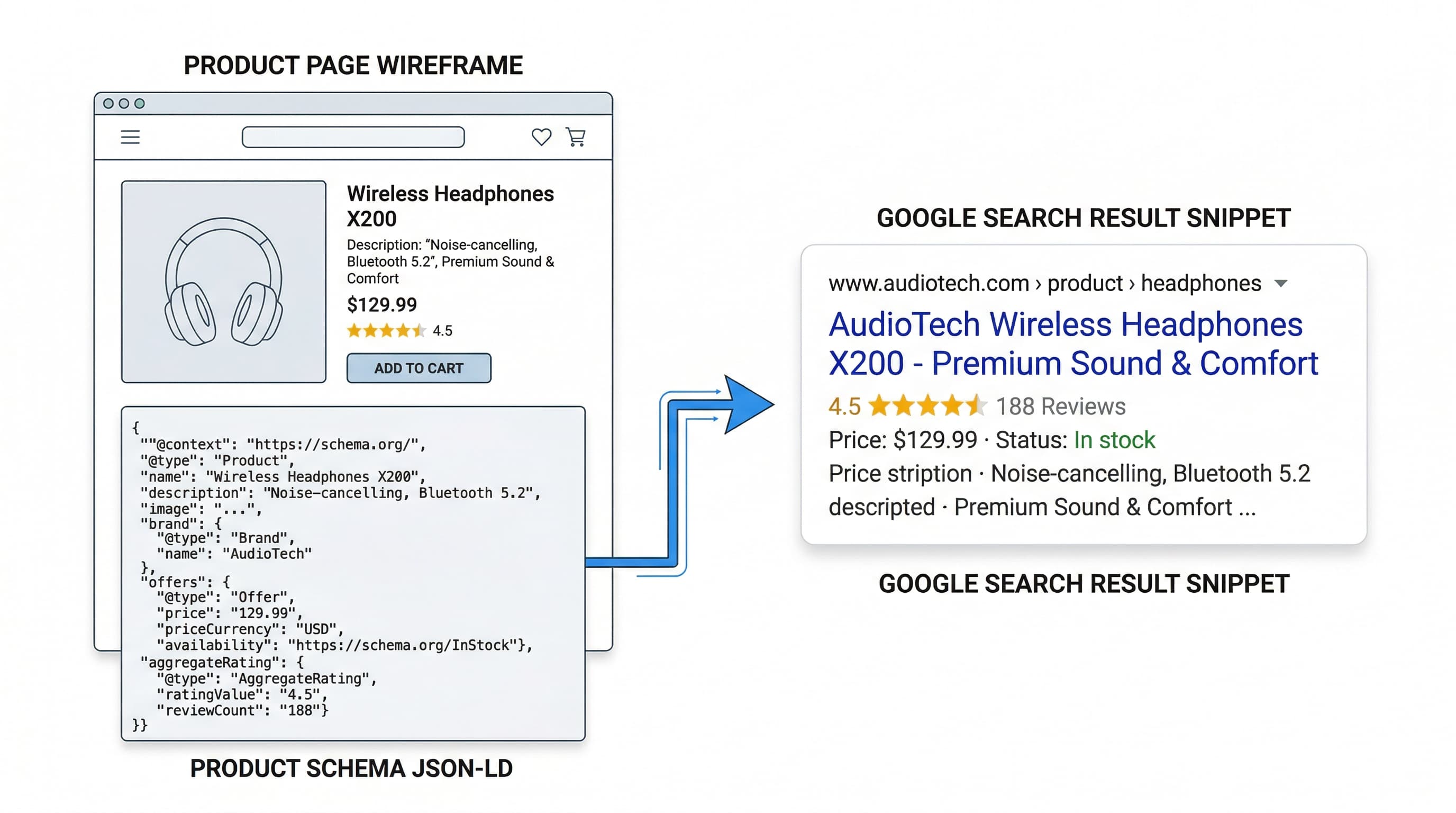
Schema markup is a form of microdata that helps search engines parse and display your content in rich results. For ecommerce product pages, adding Product schema is absolutely non negotiable. It allows Google to display price, availability, and review ratings directly in the search engine results pages. This extra real estate significantly increases click through rates.
When implementing JSON-LD Product schema, ensure you include mandatory properties such as "name", "image", "price", "priceCurrency", and "availability". To truly stand out, you should also include recommended properties like "sku", "mpn", "brand", and "aggregateRating". When Google reads this structured data, it can confidently match your product to a user's specific query. Furthermore, connecting your structured data to your Google Merchant Center feed creates a synchronized data ecosystem that boosts both organic and paid shopping visibility.
Breadcrumbs provide a secondary navigation scheme that reveals the user's location within your website hierarchy. They are essential for ecommerce SEO product pages because they distribute link equity from your high authority category pages down to individual product pages.
Furthermore, Google displays breadcrumbs in SERPs, providing users with immediate context about your catalog structure. Ensure your breadcrumb structure reflects a logical, semantic hierarchy, such as Home > Men's Footwear > Running Shoes > Specific Product. You must also implement BreadcrumbList schema markup so search engines can accurately parse this navigational trail. Avoid using generic terms like "Back" or "Products" in your breadcrumbs; use actual category keywords.
Relying solely on standard text descriptions to convey technical specifications is a structural mistake. Search engines need cleanly structured data to understand specifications like material composition, dimensions, weight, and compatibility. Shopify metafields allow you to create custom, dedicated fields for these attributes.
By storing this data systematically in metafields, you can dynamically inject it into your schema markup and frontend HTML tables. This makes it infinitely easier for both bots and users to digest complex information. For example, instead of hiding the fabric blend in a massive paragraph, a metafield outputs a clean "Material: 80% Cotton, 20% Polyester" tag that search engines can easily index and use for filtered searches.
Many ecommerce platforms automatically generate separate URLs for different product variations (like size or color). For example, a blue shirt and a red shirt might have entirely different URLs. This setup frequently leads to keyword cannibalization, where multiple pages from your own site compete for the same general query, confusing search engines and diluting your ranking power.
To resolve this, choose one primary URL for the product family. Use canonical tags on the variation pages pointing back to the primary URL. This consolidates link equity and tells search engines exactly which page to rank. The only exception is if there is significant, distinct search volume for a specific variation (e.g., "Red Nike Running Shoes"), in which case you might optimize that specific variant page to stand on its own.
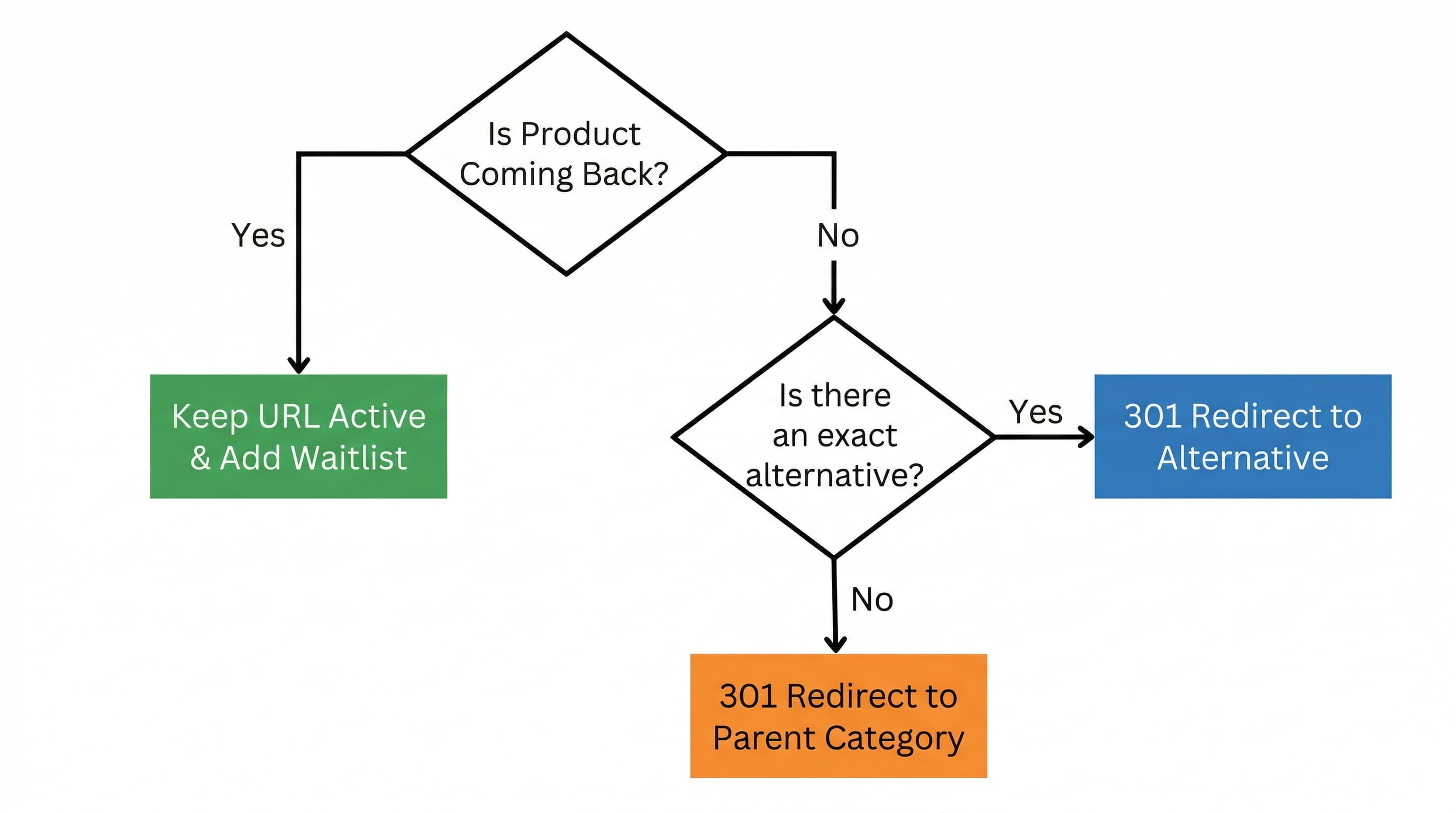
Deleting a product page as soon as an item goes out of stock is one of the most common and damaging SEO errors. It immediately creates 404 Not Found errors, frustrating users and wasting any backlink authority that the page had acquired over time.
Instead, keep the page live and manage it strategically. If the product is temporarily out of stock, leave the URL active, clearly state the out of stock status, and add an email waitlist form. This captures leads while maintaining SEO value. If the product is permanently discontinued, implement a permanent 301 redirect to the most relevant alternative product or the parent category.
Furthermore, consider the implications of soft 404s. If a page loads a standard layout but effectively says 'Product Unavailable' with no further navigation options, Google might treat it as a soft 404 and deindex it. Always provide clear pathways to related categories or upgraded models.
Once your technical foundation is solid, you must focus on the actual words on the page. Content optimization ensures you match the search intent, satisfy the search engine crawlers, and convince the user to add the item to their cart.
Shoppers at the bottom of the funnel use specific, highly focused long tail keywords. They search for exact model numbers, specific colors, and precise features. You must conduct keyword research focusing heavily on these transactional modifiers.
Integrate terms like "buy", "price", "specs", "vs", and "review" naturally into your headings, title tags, and body text. Do not engage in keyword stuffing. Instead, build a robust semantic net around your primary product keyword. Use latent semantic indexing (LSI) keywords that naturally relate to the product. If selling a camera, include terms like "megapixel", "lens mount", "autofocus", and "ISO range" to prove topical relevance to the algorithm.
Writing unique meta tags for thousands of SKUs manually is virtually impossible for most teams. However, relying on default or duplicate meta titles severely harms your click through rates and rankings.
You must utilize automation to generate optimized meta titles and descriptions at scale. Establish a strict, keyword rich template for your catalog, such as "Buy [Product Name] in [Color] - [Brand] | [...]