

Product Content
How to Create Product Videos for Ecommerce at Scale with AI
A practical playbook to generate product videos at scale using a 5-shot storyboard, AI generators, and a repeatable QA process.
Mar 3, 2026
Read More
Move beyond static images. Learn how to treat sizing as structured data to reduce returns, improve PDP conversion, and scale your catalog operations.

Quick answers to common questions.
A practical playbook to generate product videos at scale using a 5-shot storyboard, AI generators, and a repeatable QA process.
Mar 3, 2026
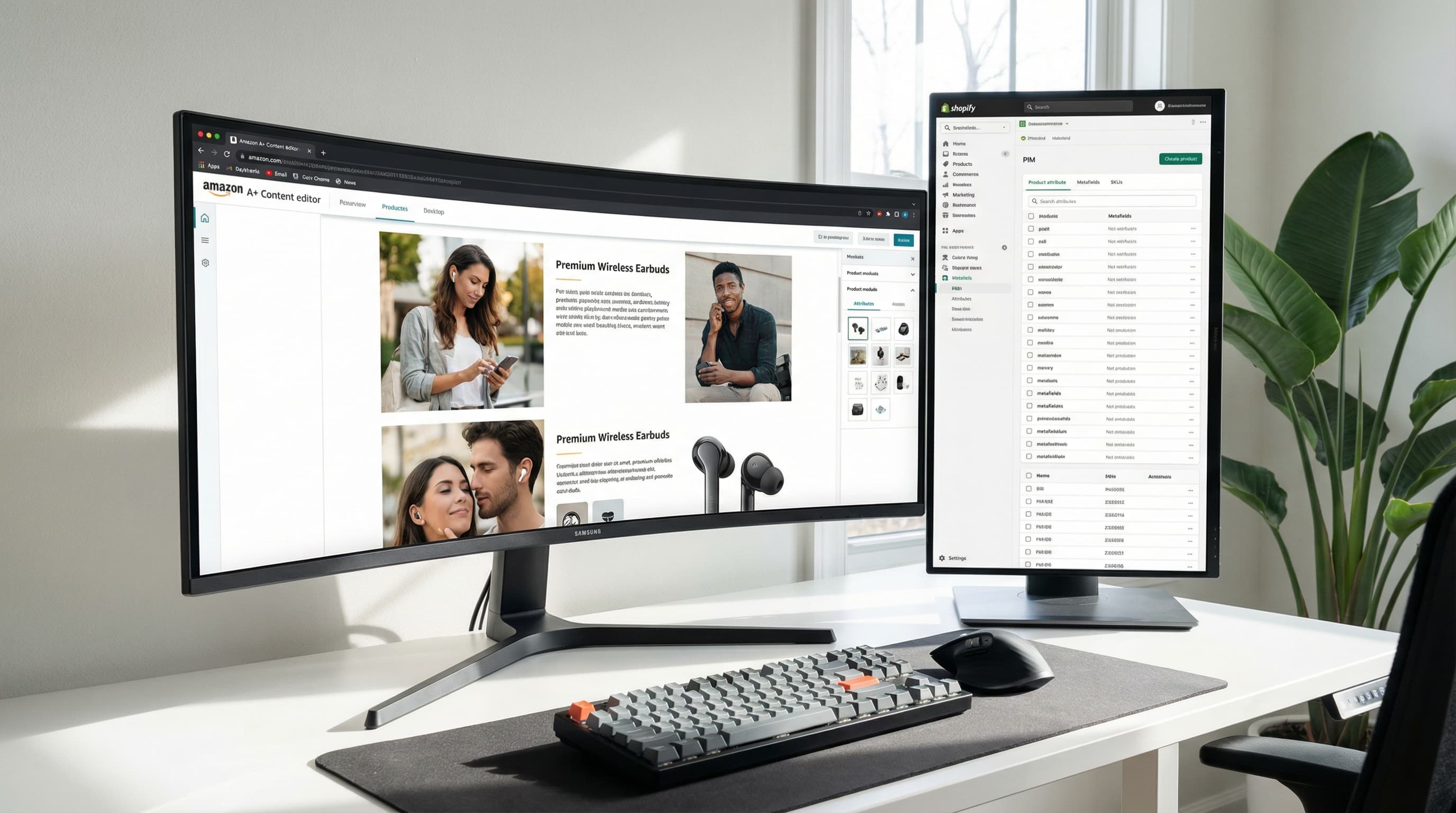
Operational playbook to convert Shopify/PIM attributes and metafields into reusable and scalable A+ modules.
Feb 4, 2026

Technical and operational guide to master structured data markup, improve CTR, and scale your UGC without penalizing load speed.
Feb 3, 2026
Sizing mistakes are among the highest margin drains in fashion ecommerce, and your current size chart template is likely part of the problem. Static images that show measurements as pictures fail to scale because they are inconsistent across products and do not connect to SKU-level data. That forces customers to guess, buy multiple sizes, and then return most of them.
Returns due to fit inflate shipping and restocking costs and destroy conversion because shoppers add extra items to hedge their bets. Public reports show fit and sizing as a leading category reason for returns in apparel and footwear, which makes sizing improvements a lever that improves both gross margin and site conversion. Industry summaries highlight returns pressures; see a sample analysis at Jay Group.
Treat sizing as structured catalog data, not as an image, and you unlock automation for variant mapping, personalization, and fast QA.
Both matter because they let you map measurement fields to variants and power fit guides that reduce returns. Start with a small template of consistent measurement names, mapping each to the SKU, and require QA checks using returns reasons and reviews as feeding signals. This creates a continuous improvement loop that shrinks returns and protects margin. Start measuring and mapping today to stop margin leakage. Use returns reason tags and review snippets as signals to prioritize catalog fixes and treat the fit guide as a product feature owned by catalog operations and CRO teams.
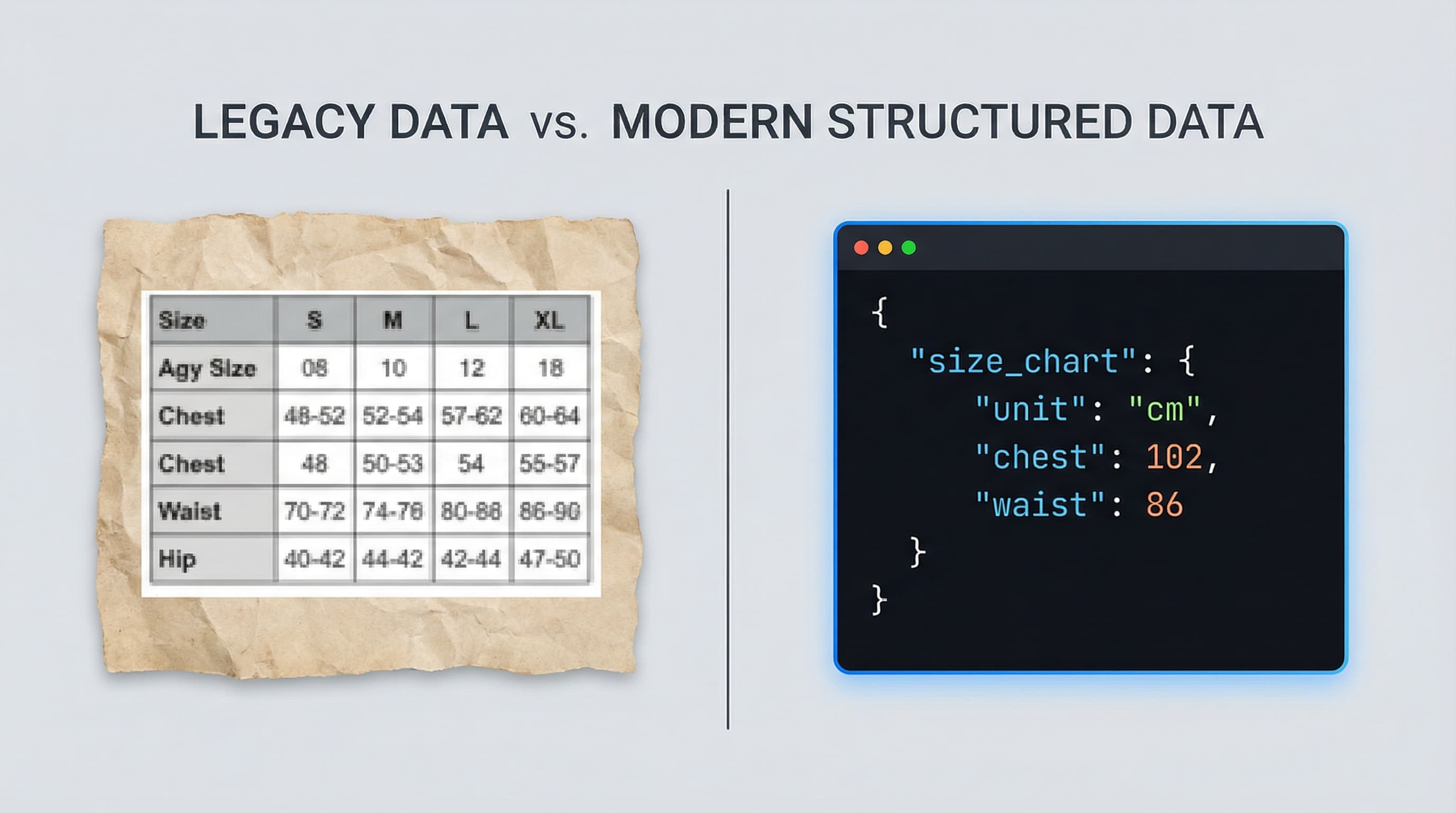
Treat a size chart template as structured catalog data rather than a static image. This allows teams to automate size recommendations, map measurements to variants and SKUs, and apply QA rules across the catalog so fit information remains reliable as assortment scales.
Structured sizing data is machine-readable and reduces errors when integrating with PIMs, marketplaces, and personalization systems.
Clear Points of Measure (POM) provide a common vocabulary between design, product tech, and operations. Without it, automation will break, and returns analysis will be noisy.
How to approach it: Standardize a canonical POM list per category with a single name, a one-line measurement instruction, and an attached photo reference. Store the POM list in your PIM and reuse it across styles so ingest and reporting are consistent.
Example:
Typical error: Mixing garment and body terms without marking which is which.
Units and tolerances prevent false mismatches between suppliers and marketplaces.
How to approach it: Choose one unit system per market, document allowable tolerance by garment type, and save both unit and tolerance as structured fields. Apply tolerance checks during ingestion and flag values that exceed expected ranges for manual review.
Example:
Typical error: Publishing raw supplier numbers without converting units or applying tolerances.
Being explicit about garment versus body measurements is the single biggest clarity improvement for customers and for size recommendation logic.
How to approach it: Label every measurement as "garment" or "body".
Use both to power size recommendation algorithms, returns analysis, and customer guidance.
Example: Body waist 80cm maps to garment waist 88cm for a style with 10% fabric stretch.
For a compact technical reference on methods for garment measurement, see Textile Merchandising.
A size chart template is the operational foundation that turns freeform images into consistent, queryable catalog data. Start by treating each measurement as a named attribute with a clear definition and a unit so teams and tools map and use values consistently.
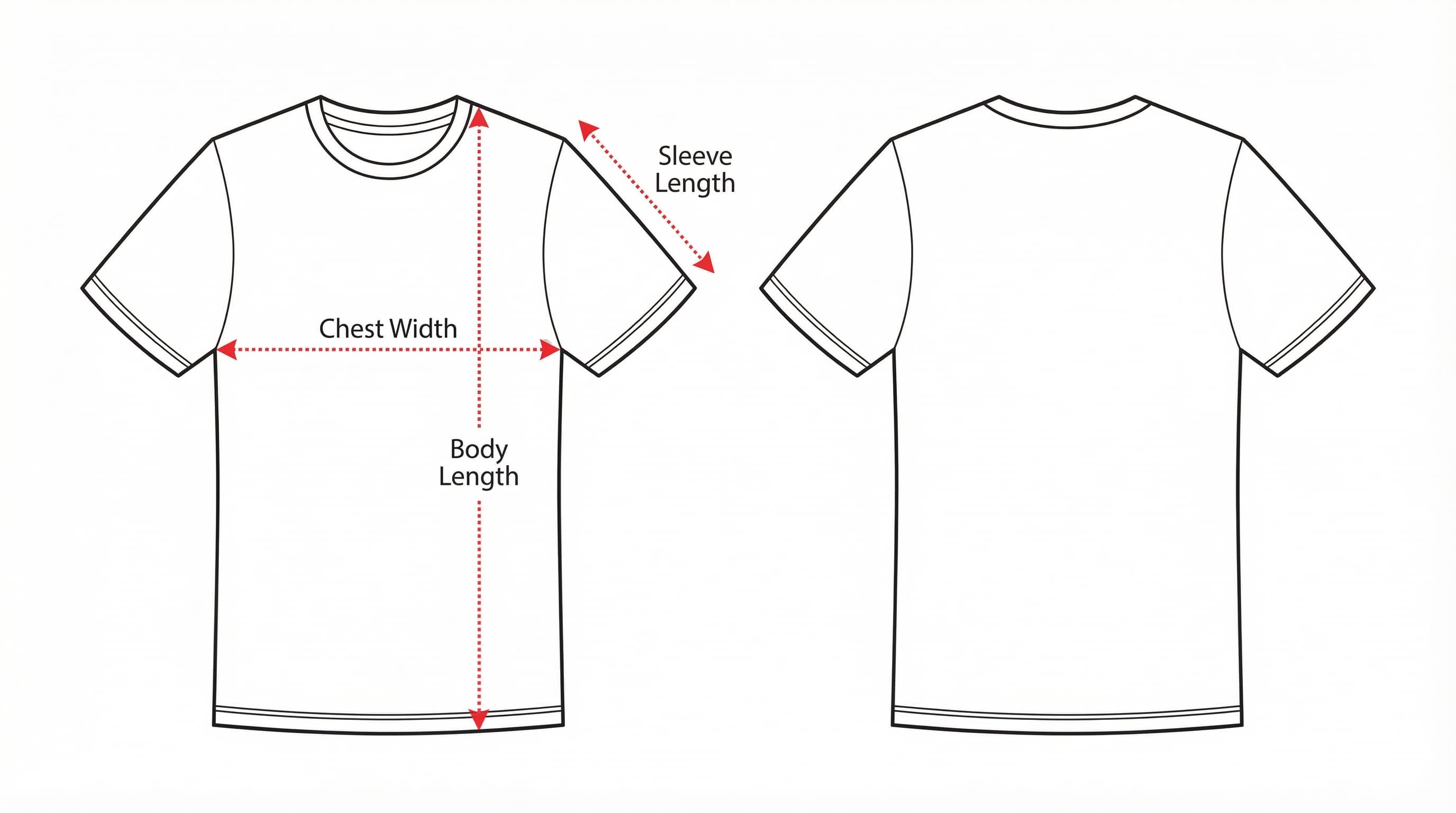
Accuracy reduces fit-related returns and makes reporting actionable. Use the garment as the gold standard for fit, not the body, because it yields repeatable numbers that map directly to SKUs and variants. This lets you compare like-for-like across suppliers and styles and automate fit recommendations.
The tool must publish structured values and connect to catalog systems to scale. The maker must store named measurements, units, version history, and map attribute keys to product variants and SKUs. It must export numeric values to Shopify metafields and product feeds, provide a PDP preview, and track measurement source (sample measurement, factory spec, or AR measurement).
For a practical external reference on published size guides, see the ASOS size guide.
Treat sizing as structured catalog data, not a static image. A size chart template that is consistent and mapped to SKU level reduces returns and speeds catalog operations. This framework shows how to model measurements, map them to variants, publish a reusable fit guide, and run QA loops.
Context: Clear measurement variables reduce shopper ambiguity and rework across teams. How to approach: For each product family, list only the measurements that matter for fit (e.g., chest, waist, hip, inseam). For each measurement, record a canonical name, unit, and a one-line "how to measure" instruction. Centralize records in a PIM or a master spreadsheet so the same definition is used across SKUs and feeds. Example: Measurement "chest", unit "cm", method "measure garment flat across chest then double".
Context: Mapping guarantees each SKU exposes the correct numbers to the shopper. How to approach: Build a mapping table that links SKU or variant ID to the measurement record and to a short fit label such as "true to size", "runs small", or "runs large". Keep mapping canonical in the PIM and sync to Shopify metafields so the PDP component reads a single source of truth. Example: SKU AB123 links to womens tee medium, chest 96 cm, fit "true to size".
Context: A consistent presentation reduces surprise and returns and improves conversion. How to approach: Create a reusable template component that reads measurement fields and renders a size chart with a unit toggle for cm/in. Expose structured attributes so marketplaces and feed consumers can ingest the data. Include a one-line fit recommendation and an example size match for a typical body measurement. Example: PDP renders a table with both units and a short fit recommendation.
Context: Data quality decays as the catalog scales and product assortments change. How to approach: Automate checks for missing fields, inconsistent units, and spikes in size-related returns. Link returns reasons, review tags, and support tickets to product records and trigger catalog owner review when anomalies exceed a threshold. Example: Automated alert when returns tagged "size" exceed threshold for a given SKU.
For reference on fit uncertainty, see Baymard.
Start by treating your size chart template as structured catalog data rather than a static image. Store standardized measurements and fit notes per product and per variant so the PDP can render a consistent interactive fit guide that shoppers can rely on.
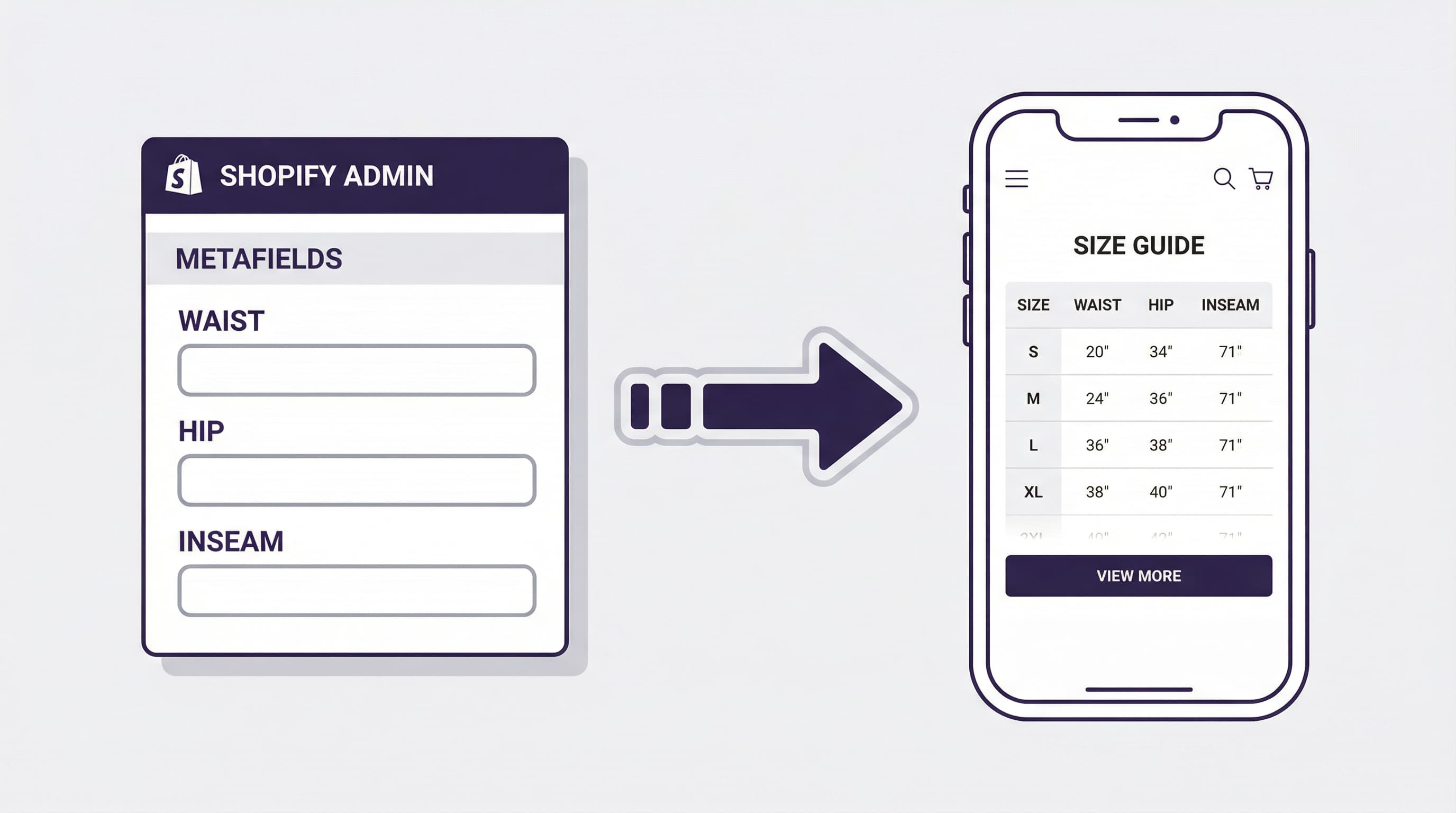
Context: Inconsistent names, units, and locations cause returns and confusion. Approach: Model each measurement with fields for measurement name, numeric value, unit, measurement location, and confidence level. Use a Shopify Metaobject when you need reusable measurement sets across multiple products so the same size set can be referenced by many products. Example: Name: "Chest", Value: "96", Unit: "cm", Location: "Across front", Confidence: "High".
Context: Customers buy variants, not product pages, so sizing must attach to SKUs.
Approach: Add a variant metafield or a reference to a metaobject record per variant. Automate mapping from your PIM or size source using bulk import or API sync to avoid manual drift. Keep the mapping explicit so every SKU points to one size set.
Example: variant_sku_12345 references metaobject sizeset_womens_tops_m.
Context: A single component enforces consistency and reduces maintenance work. Approach: Build a frontend module that queries product metafields or metaobjects and renders a numeric table, measurement diagram, and a simple size recommendation button that uses selected variant dimensions. Keep the component data-driven so diagrams and copy update automatically when the underlying data changes. Reference: Shopify metafields documentation.
Manage the size chart template as structured catalog data to scale fit accuracy across thousands of SKUs. This section gives a practical operations-first QA loop: extract measurements from supplier material with AI, map validated measurements to variants and SKUs, publish via metafields and feeds, and close the loop with returns reasons and review signals so size data improves continuously.
Context: The most common first data source is supplier spec sheets provided as PDFs, spreadsheets, or free text. How to approach: Build a document extraction pipeline that locates measurement labels, normalizes units, and maps values to your canonical measurement model. Configure a confidence threshold and route low-confidence items to a human verifier. Capture provenance as structured rows that include measurement name, unit, value, and source reference so you can audit changes.
Context: Each variant can differ, and customers expect variant-specific fit information on the product detail page.
How to approach: Persist per-variant measurements in Shopify metafields or in your PIM feed and expose them to the frontend through your template. Use schema markup to provide structured size data to search engines and marketplaces, which helps discoverability and consistency.
Example: variant_sku_12345, waist_cm: 76, allowance_cm: 2.
Context: Returns and reviews contain the operational signals needed to correct directional bias in your size data. How to approach: Use natural language processing (NLP) to classify return reasons and to extract fit comments from reviews and support tickets. Aggregate signals by SKU, size, and measurement, then compute a directional bias per measurement. Tag low-confidence or high-bias entries for re-measure and prioritize high-return SKUs for rapid audits.
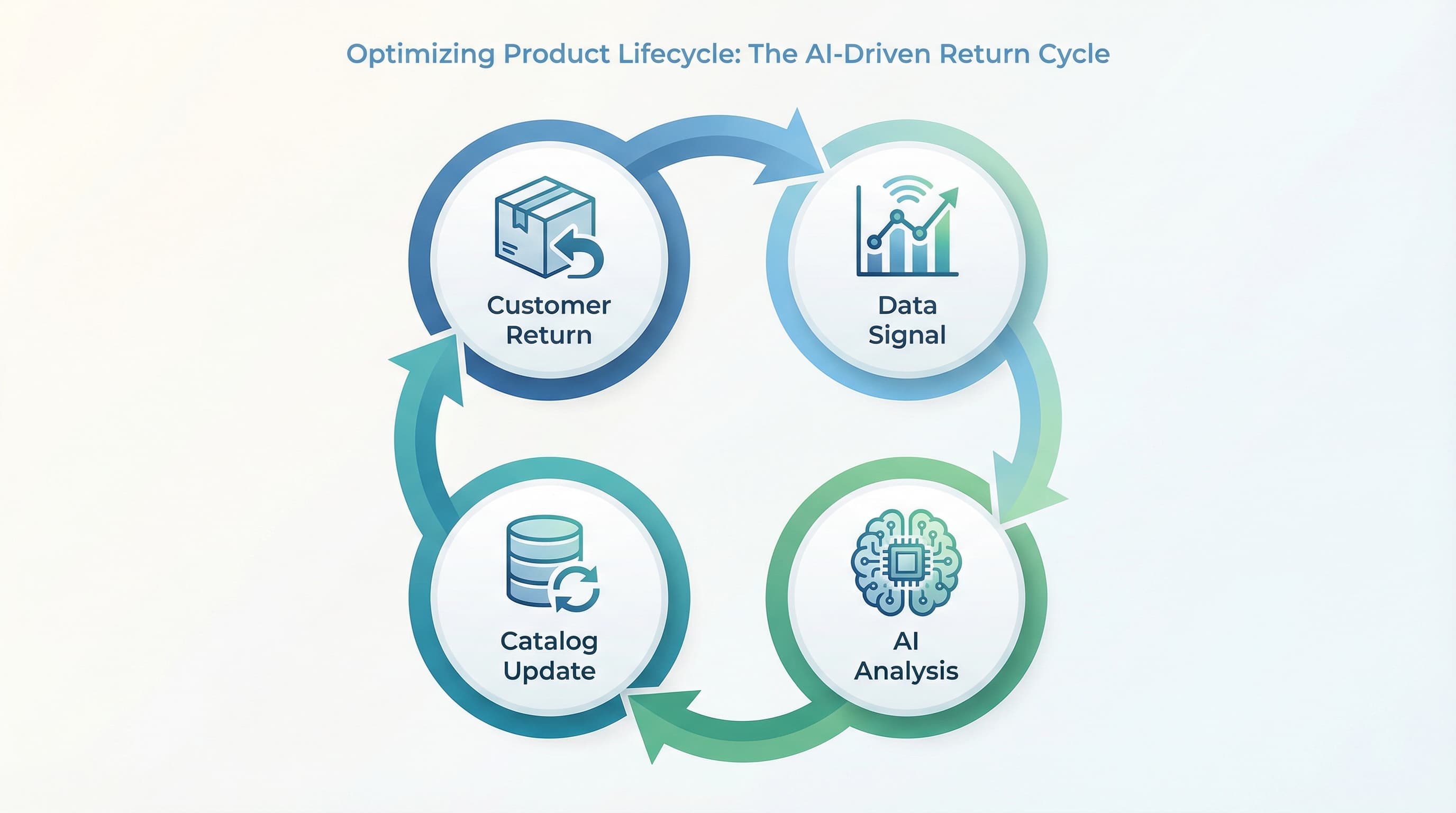
Example: If multiple reviews for size M say "sleeve is too short", increase the sleeve measurement for that SKU family, update photography, and add a short fit note. Typical error: Waiting months to act instead of running weekly micro-updates and A/B tests.
For practical guidance on returns management and sizing, see Capital One Shopping Research.
Managing size charts, metafields, and variant data manually across thousands of SKUs is an operational bottleneck that bleeds margin.
ButterflAI detects gaps in your catalog data and automates the generation and optimization of product content—from descriptions to structured sizing attributes. By standardizing how your PIM and Shopify store interact with size data, ButterflAI ensures your fit guides are accurate, scalable, and directly connected to reducing returns.