
Product Content
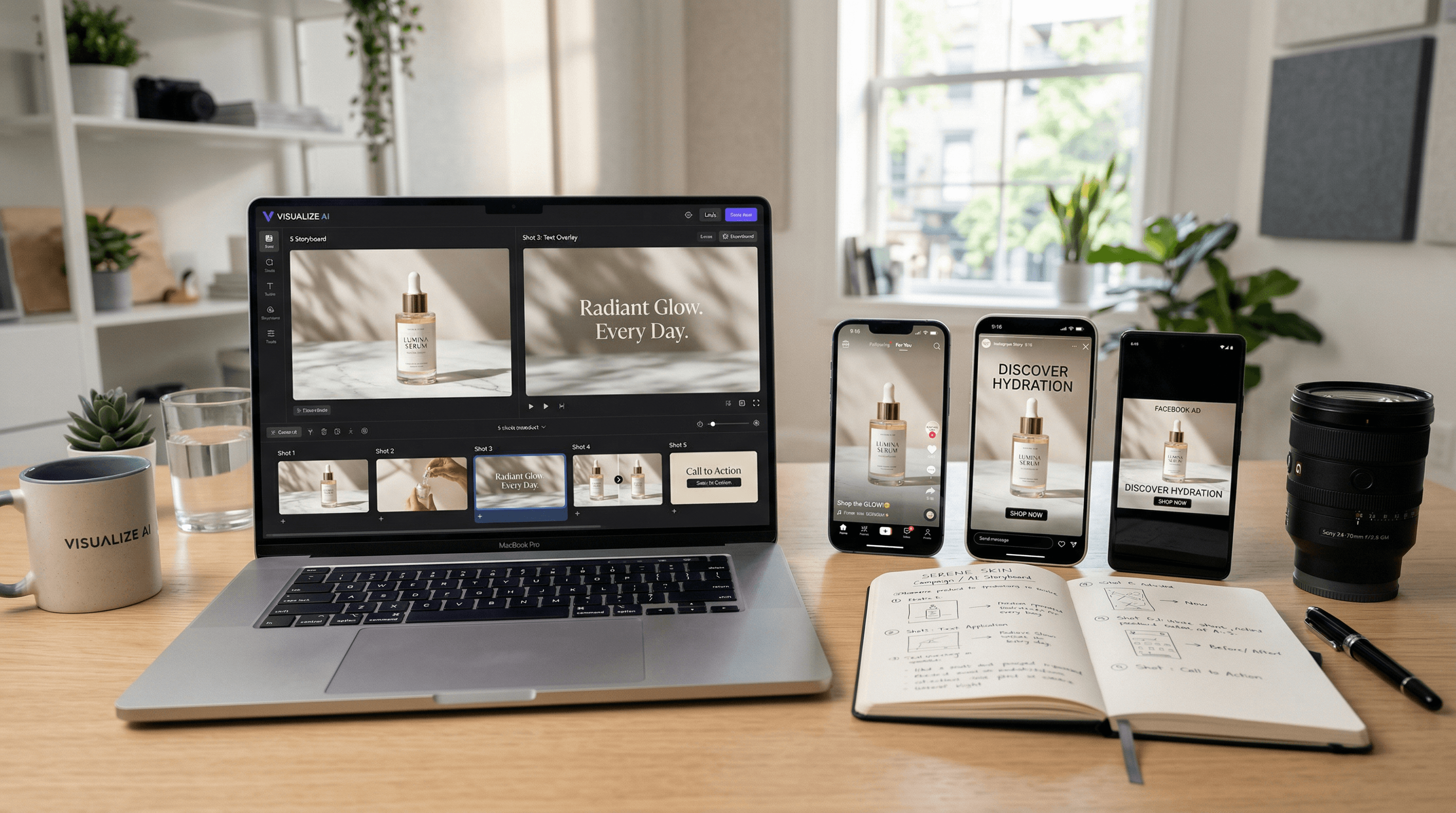
How to Create Product Videos for Ecommerce at Scale with AI
A practical playbook to generate product videos at scale using a 5-shot storyboard, AI generators, and a repeatable QA process.
Mar 3, 2026
Read More
Discover advanced techniques for creating product descriptions that convert. SEO strategies, best practices, and real examples to maximize sales in your eCommerce store.

A practical playbook to generate product videos at scale using a 5-shot storyboard, AI generators, and a repeatable QA process.
Mar 3, 2026
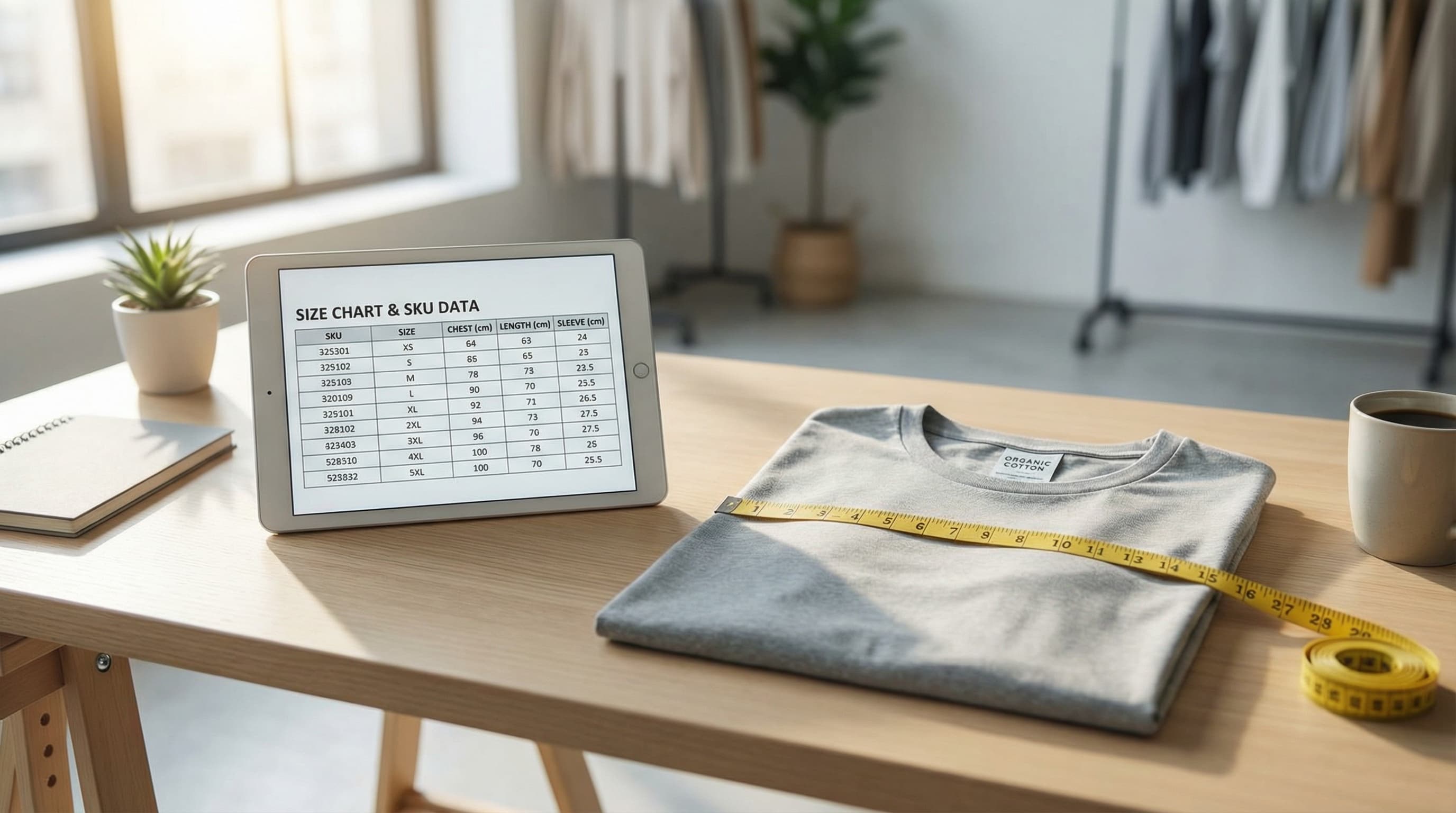
Move beyond static images. Learn how to treat sizing as structured data to reduce returns, improve PDP conversion, and scale your catalog operations.
Feb 11, 2026
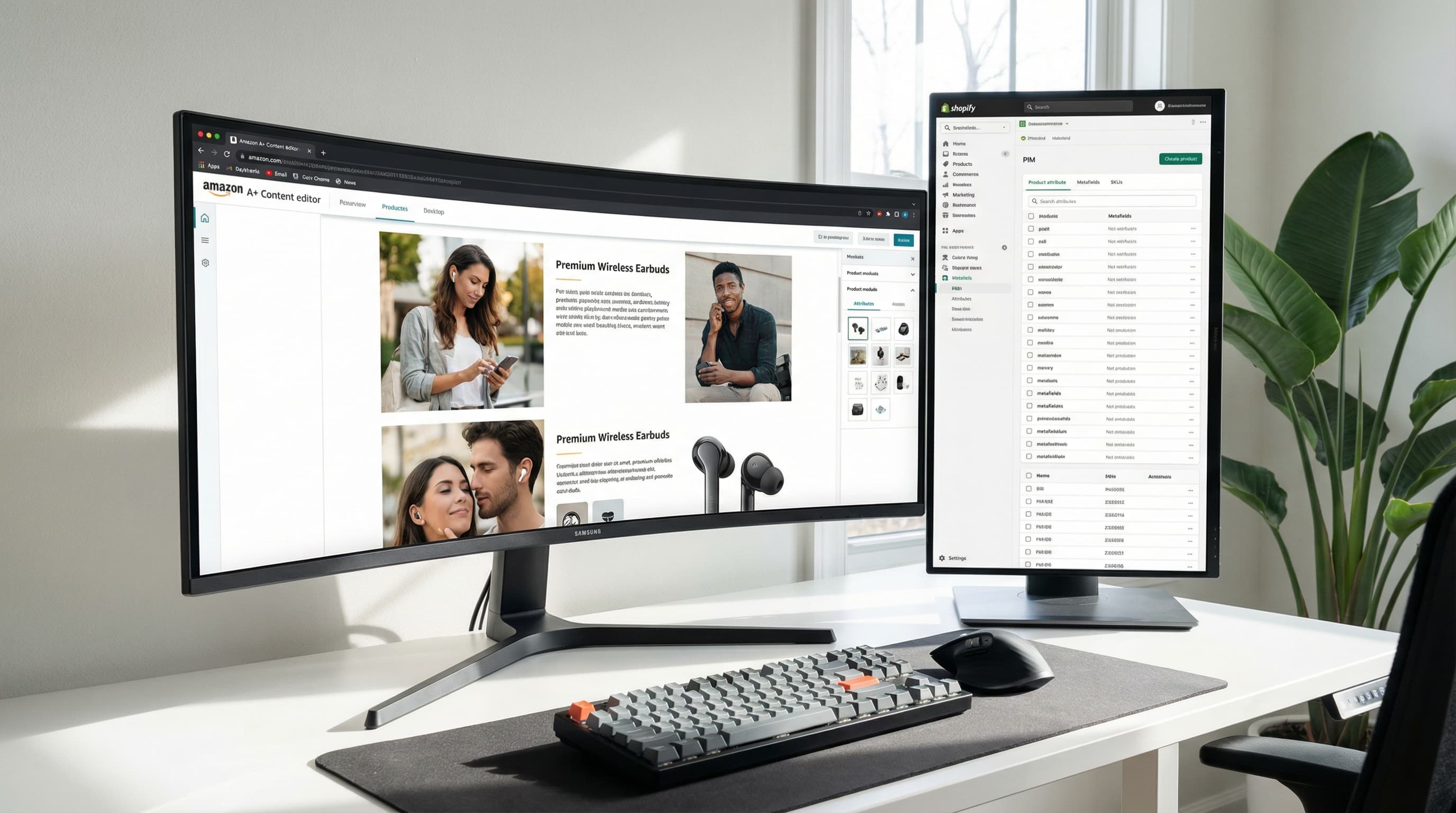
Operational playbook to convert Shopify/PIM attributes and metafields into reusable and scalable A+ modules.
Feb 4, 2026
In today's competitive eCommerce landscape, optimizing product descriptions isn't optional—it's essential for survival. Research from ConvertCart's comprehensive eCommerce study reveals that 87% of online shoppers consider product descriptions as the most important factor in their purchase decision. According to Fera's analysis of online retail statistics, a properly optimized description can increase conversions by up to 127% and significantly improve SEO rankings. This guide will teach you the exact techniques used by the most successful online stores to transform basic descriptions into powerful sales tools.
For teams moving from theory to production, the product description generator helps turn your research, intent, and benefit framework into repeatable copy rules across large catalogs.
Product content optimization is a scientific methodology that combines consumer psychology, advanced SEO techniques, and persuasive copywriting to create descriptions that don't just inform—they sell. This process involves deep keyword research, search intent analysis, buyer journey understanding, and the application of persuasion principles that emotionally connect with your target audience. The core principle is simple: transform product features into customer benefits while maintaining search engine visibility.
💡 Key insight: According to WebFX's comprehensive marketing statistics report, optimized descriptions don't just increase conversions—they also improve time on page (+34%), reduce bounce rate (-28%), and increase average order value (+19%).
Understanding what motivates customers to buy is fundamental to writing effective product descriptions. Research from Harvard Business Review's consumer behavior studies identifies several key psychological triggers that consistently influence purchase decisions. Reciprocity plays a crucial role—when you provide genuine value through detailed, helpful information, customers feel compelled to reciprocate through purchase. Social proof is equally powerful, with BrightLocal's consumer review survey showing that 87% of consumers read online reviews before making purchase decisions. Scarcity and urgency activate the brain's loss aversion mechanism, making customers more likely to act quickly. The key is implementing these principles subtly and authentically rather than using aggressive sales tactics that can backfire.
🧠 Psychology insight: Cognitive fluency research shows that easy-to-read descriptions increase perceived product quality by up to 23%. Use short sentences, bullet points, and clear formatting to enhance comprehension.
Effective competitor analysis goes far beyond reading their product descriptions. According to SEMrush's competitive intelligence report, businesses that conduct systematic competitor analysis outperform rivals by 67% in revenue growth. Start by identifying your top 10-15 direct and indirect competitors using tools like SimilarWeb or Ahrefs. Analyze not just what they say, but how they structure content, which keywords they target, and what emotional appeals they use. Pay special attention to their customer reviews—these reveal gaps in their messaging that you can exploit. Document their pricing strategies, guarantees, and unique selling propositions. Most importantly, identify what they're not addressing—these gaps represent your opportunities for differentiation.
📊 Strategic tip: Create a competitive content matrix tracking keyword usage, content length, emotional triggers, and conversion elements. Update quarterly to stay ahead of market changes.
This methodology has been refined after optimizing descriptions for stores generating from $50K to $50M annually
The foundation of any successful description lies in research. You must understand not only what your audience seeks, but how they search, what words they use, what objections they have, and what motivates them to buy. Simultaneously, analyze how successful competitors position their products and identify differentiation opportunities.
Tip:
⏱️ 60-90 minutes per product category
Your description structure should follow the customer's natural decision-making flow. Start with an emotional hook, present key benefits, address objections, include social proof, and end with a clear call-to-action. Each element must be strategically positioned to guide the customer toward purchase.
Tip:
⏱️ 45-75 minutes per description
Optimization doesn't end with publication. You must implement an A/B testing system for different description variations, monitor performance metrics, and continuously adjust based on real data. This includes meta description optimization, structured data, and technical elements that improve visibility.
Tip:
⏱️ 30-45 minutes per technical optimization
These strategies have been extracted from analyzing 500+ successful online stores and have consistently proven to increase conversions
Incorporate social proof elements subtly but effectively: mention how many customers have purchased, include micro-testimonials, and use popularity indicators that generate FOMO (fear of missing out). Syndigo's comprehensive study on product content impact found that 83% of shoppers abandon sites with insufficient product information.
Impact: High
Create versions specifically adapted for mobile, tablet, and desktop. Each version should consider usage context, attention span, and unique navigation patterns of each device.
Impact: High
Optimize for voice search queries by including natural questions and conversational answers. WebFX's latest digital marketing research indicates that 27% of mobile searches are already voice-based, and this percentage continues growing rapidly.
Impact: Medium
Goes beyond basic storytelling. Create narratives that activate all five customer senses, allowing them to 'experience' the product before buying. Include specific sensory details that generate deep emotional connection. Marketing Experiments' A/B testing research shows up to 78% increase in conversion when product page elements reduce customer anxiety.
Impact: Very High
Implement related keyword clusters that cover the entire spectrum of customer search. Use long-tail variations, contextual synonyms, and voice search terms to maximize organic visibility. According to Number Analytics' comprehensive analysis of eCommerce SEO performance, SEO tools can boost retail performance by up to 127% in revenue growth.
Impact: High
Integrate price psychology techniques directly into the description. Mention perceived value, compare with more expensive alternatives, and use cognitive anchoring to position your product as the smart choice.
Impact: High
Real examples of optimizations that generated measurable and significant results
Original Description (Unoptimized)
Bluetooth 5.0 headphones. 6-hour battery. IPX4 water resistant. Black color available. Includes charging case. Stable connectivity. High-quality sound.
Word count: 22
Optimized Description (Results-Focused)
Experience total musical freedom without limiting cables. These premium wireless headphones with Bluetooth 5.0 technology definitively eliminate tangles and interrupted connections that ruin your listening experience. With 6 hours of continuous battery, they accompany your complete routine: from morning workouts to late-night work sessions. Their IPX4 water-resistant design withstands intense sweat and light rain, turning every activity into an immersive sound experience. Crystal-clear sound with deep bass transforms every song into an emotional experience, while passive noise cancellation completely immerses you in your personal world. Includes compact charging case that extends autonomy to 24 total hours. Join over 47,000 customers who have already transformed their musical experience. 100% satisfaction guarantee or full refund.
Word count: 138
Key Improvements
Original Description (Unoptimized)
Conversion rate with basic unoptimized description
Product Page Conversion: 2.1%
Optimized Description (Results-Focused)
Conversion rate with strategically optimized description
Product Page Conversion: 4.8%
Key Improvements
According to Baymard Institute's extensive eCommerce usability research, these mistakes are responsible for 73% of lost sales opportunities in eCommerce. Avoiding these pitfalls can immediately improve your conversion rates.
Mistake #1: Listing Features Instead of Selling Benefits
Mistake #2: Ignoring Customer Search Intent
Mistake #3: Keyword Over-Optimization
Mistake #4: Not Addressing Main Customer Objections
Mistake #5: Weak or Missing Call-to-Actions
Mistake #6: Ignoring Mobile Optimization
Mistake #7: Poor Visual Design
Perfect length doesn't exist universally. It depends on multiple factors you must consider strategically
After analyzing over 50,000 product descriptions and their conversion metrics, we've identified clear patterns that determine optimal length. The key is balancing information needed for purchase decision with your specific audience's attention capacity.
The following factors determine the optimal length for your product descriptions:
Key Factors: