Operational inefficiency in mass catalog management
Maintaining a catalog with thousands of references updated, consistent, and optimized for SEO is a task that consumes hundreds of man-hours and often leads to serious inconsistencies. When product information is fragmented across spreadsheets, supplier emails, and poor descriptions, the user experience suffers, and return rates skyrocket due to unmet expectations.
The problem is not just the lack of data, but the inability to process it at the speed required by today's digital market. If this efficiency gap is not closed, the eCommerce team remains trapped in repetitive manual tasks, losing competitiveness against retailers already operating with dynamic catalogs enriched in real-time.
In this article, you will learn how to implement an Agentic eCommerce strategy to automate the creation of high-quality product pages, transforming technical data into persuasive and optimized content.
- Data Audit: How to identify information gaps in your current PIM.
- AI Agents: How to delegate the enrichment of attributes and descriptions.
- Governance: The automated QA system to guarantee error-free listings.
- Scalability: How to go from 100 to 10,000 SKUs without increasing the team.
From traditional PIM to Agentic eCommerce: The end of manual management
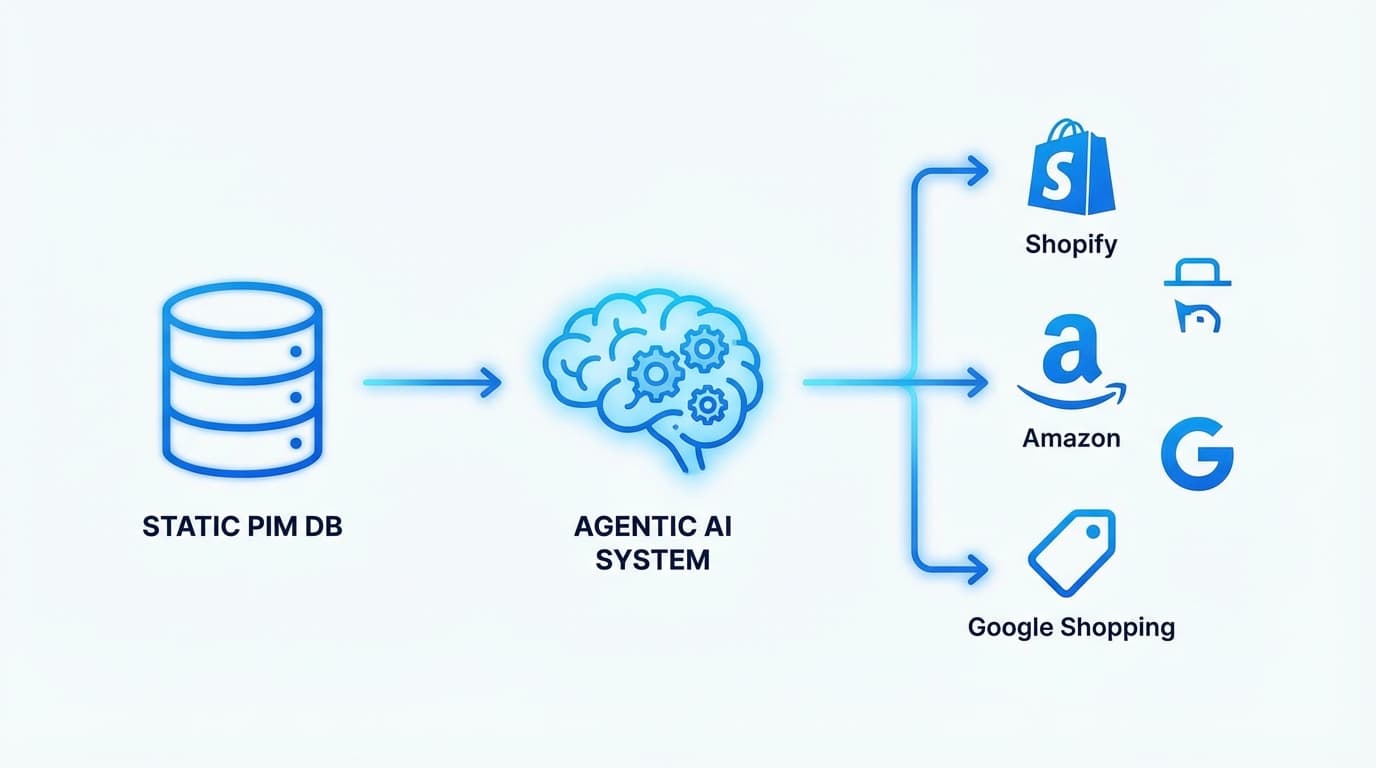
The Product Information Management (PIM) has been the central pillar of catalog management for years. However, a traditional PIM is essentially a passive container. It requires an operator to manually enter data, validate photos, and write texts. Agentic eCommerce changes this paradigm by introducing AI agents that don't just "store" information but search for, interpret, and complete it autonomously.
An Agentic eCommerce system acts on data enrichment by connecting external sources (such as supplier PDFs or competitor websites) with the internal fields of your platform. This allows the digital marketing team to move from "writing descriptions" to "supervising business rules," drastically increasing product data quality.
What differentiates an "agentic" catalog from a traditional one?
- Traditional PIM: Static, dependent on manual data entry, and prone to human copy/paste errors.
- Agentic eCommerce: Proactive, using agents that detect missing attributes and generate content based on real search contexts.
Automatic Enrichment Framework: From technical to persuasive
The biggest challenge in product pages is converting cold specifications (measurements, materials, voltages) into clear benefits for the buyer. A well-configured AI agent can read a technical table and write a paragraph explaining why that material is better for the customer, improving conversion (CRO) and SEO.
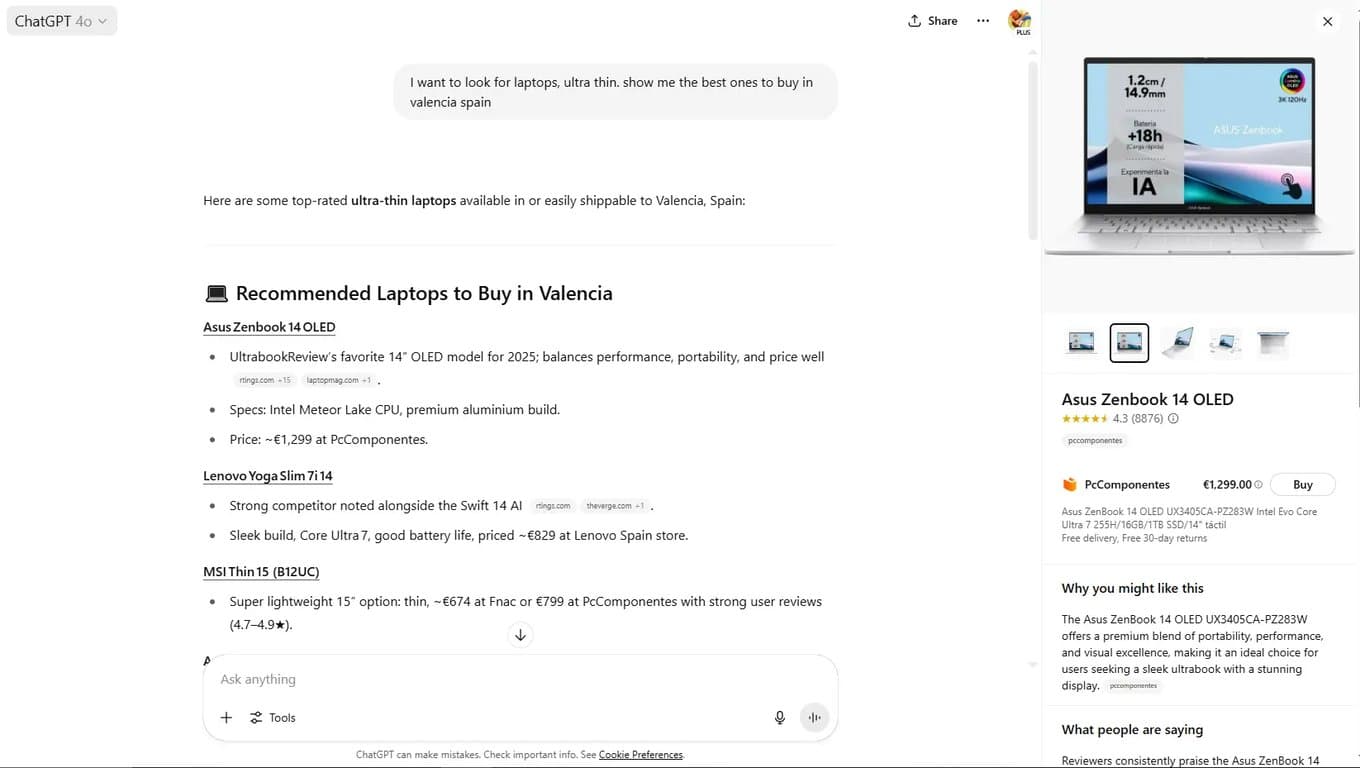
To implement this framework, it is essential to structure your Shopify metafields or your PIM attributes so that the AI knows exactly where to inject the enriched information. According to recent data on generative AI trends in retail, retail site traffic from generative AI sources grew by more than 1,200% in 2024, highlighting the importance of having structured data that these AIs can read.
Quality checklist for an optimized product page
Before automating, you must define what a "perfect page" looks like for your business. Use this checklist to set up your enrichment agents:
- Structured Title: [Brand] + [Model] + [Key Attribute] + [Color/Size].
- Complete Technical Attributes: At least 5 key specifications per category.
- Persuasive Description: Divided into "benefits" and "features."
- SEO Meta-tags: Unique Title and Description with secondary keywords.
- Internal Linking: Relationship with complementary products (upselling/cross-selling).
- Multimedia Content: Alt-text on all images with product description.
Step-by-step: How to enrich 1,000 products in 24 hours
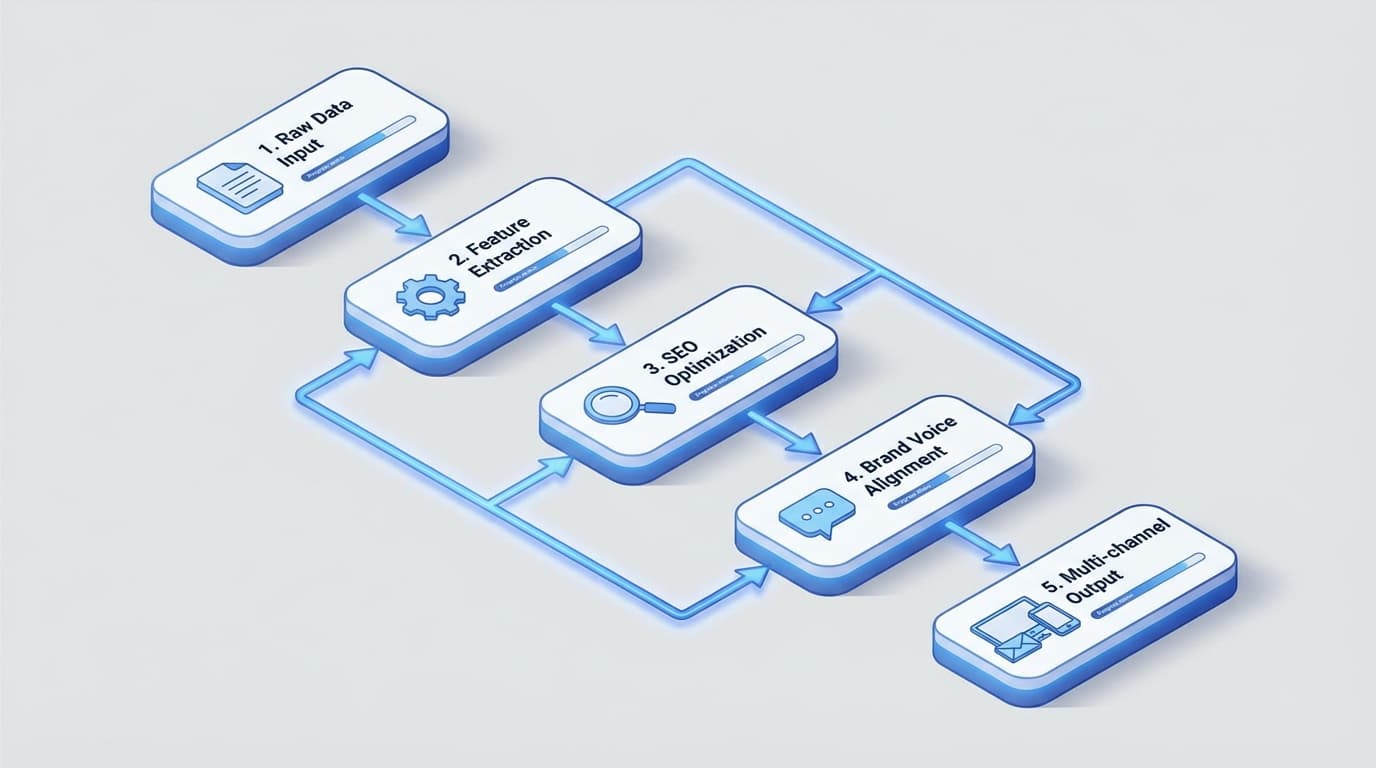
- Raw Data Ingestion: Connect your supplier feed or base CSV to your AI system. Make sure to include product names and SKUs.
- Attribute Mapping: Define which fields are mandatory (e.g., EAN, Color, Material). The system must identify what is missing.
- Search Agent Execution: Agents crawl the web or attached documents to extract missing data for each SKU.
- Content Generation: AI writes titles and descriptions following your style guide (tone of voice, length, prohibited words).
- Consistency Validation: A QA agent checks that the color mentioned in the text matches the "Color" attribute in the system.
- Publication via API: Validated data is automatically injected into Shopify, BigCommerce, or your PIM.
Data Governance at Scale: Automated Quality Control (QA)
Large-scale product catalog management fails if there is no robust quality control. A common mistake is blindly trusting generative AI without filters. Agentic data governance involves setting up "guardrails" or logical rules that content must meet before being published.
For example, if you sell electronics, a business rule might be: "If the voltage is 220V, do not publish in the US store." Or in fashion: "If the material is 100% silk, automatically add dry cleaning instructions." This listing automation not only saves time but also shields your brand against legal or customer support errors.
Example of a business rule for AI agents:
Input: Product "Sport T-Shirt." Material "80% Polyester, 20% Elastane."
Rule: If the product is "Sport" and has "Elastane," include the benefit "Total flexibility for high-intensity workouts" in the short description.
The Common Pitfall
Attempting to automate the entire catalog at once without first defining taxonomies. If your category structure is weak, the AI will generate inconsistent content. First, organize your category tree and then deploy the agents.
How we optimize your listings with ButterflAI
At ButterflAI, we help eCommerce teams automate the full enrichment cycle, from attribute extraction to SEO optimization of thousands of listings. Our platform acts as the agentic engine that connects your PIM or Shopify with advanced AI models, ensuring that every SKU is an optimized, high-quality sales asset.