

Product Content
How to Create Product Videos for Ecommerce at Scale with AI
A practical playbook to generate product videos at scale using a 5-shot storyboard, AI generators, and a repeatable QA process.
Mar 3, 2026
Read More
Discover how strategic AI-powered copywriting transforms eCommerce conversion rates. Technical guide to optimizing listings, descriptions, and increasing sales.

Many eCommerce teams manage catalogs of thousands of references with generic, incomplete, or manufacturer-copied descriptions, which dilutes brand authority and confuses the user. This lack of technical and emotional personalization causes visitors to abandon their carts at the slightest doubt, skyrocketing acquisition costs while conversion remains stagnant. In this guide, you will learn how to integrate an AI-powered copywriting framework to optimize every touchpoint of your listing and maximize your catalog's performance.
To improve the eCommerce conversion rate with AI and quality content, consider these pillars:
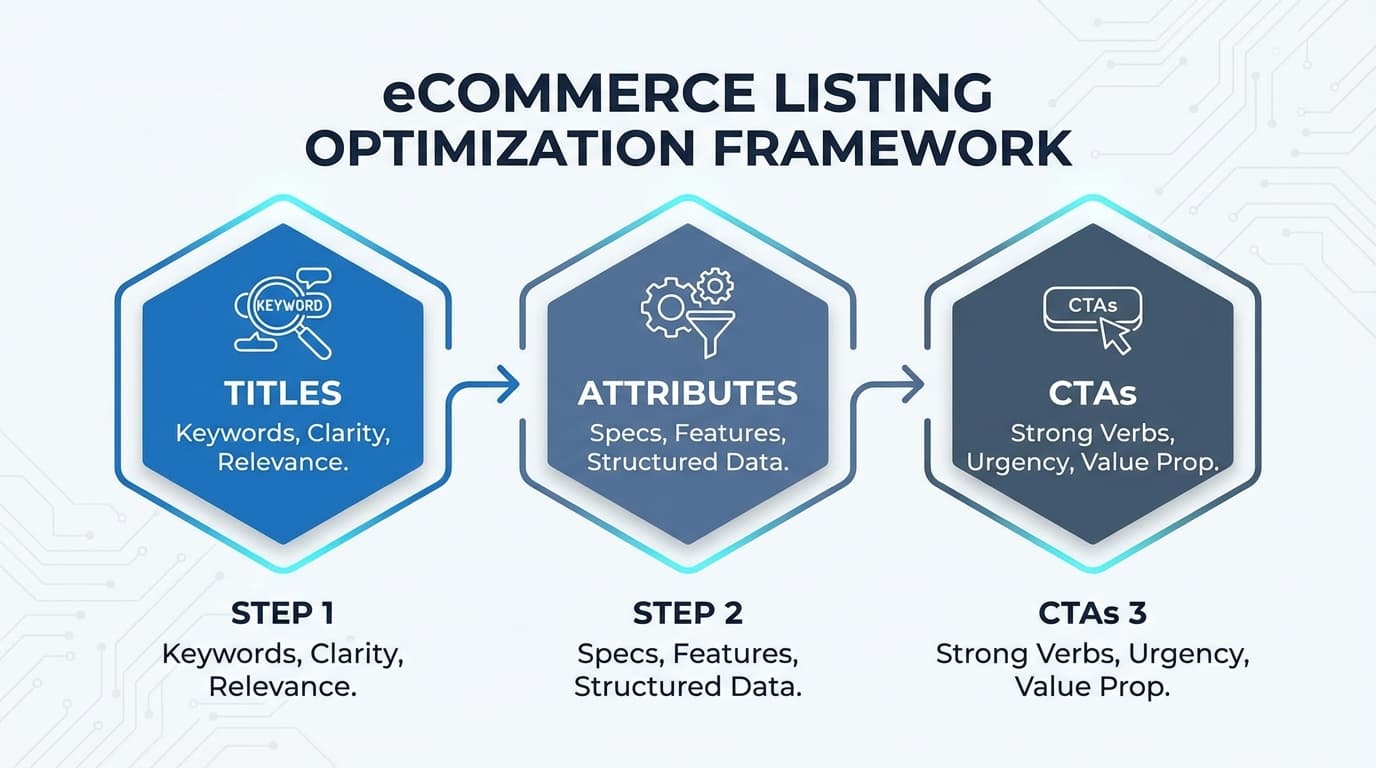
Product content is not just text; it is the salesperson attending to your customer 24/7. When we talk about eCommerce conversion rate, copywriting acts as the bridge between search intent and the final transaction. Artificial Intelligence now allows this process to scale, maintaining brand consistency across thousands of SKUs without sacrificing quality.
According to industry data, brands that commit to optimizing their Digital Shelf have seen conversion rate increases of more than 35%. This is because good copy does not just describe the product; it connects with the user's pain points.
To scale your catalog without losing the human touch, you need a repeatable system. Here is the procedure you can start applying tomorrow:
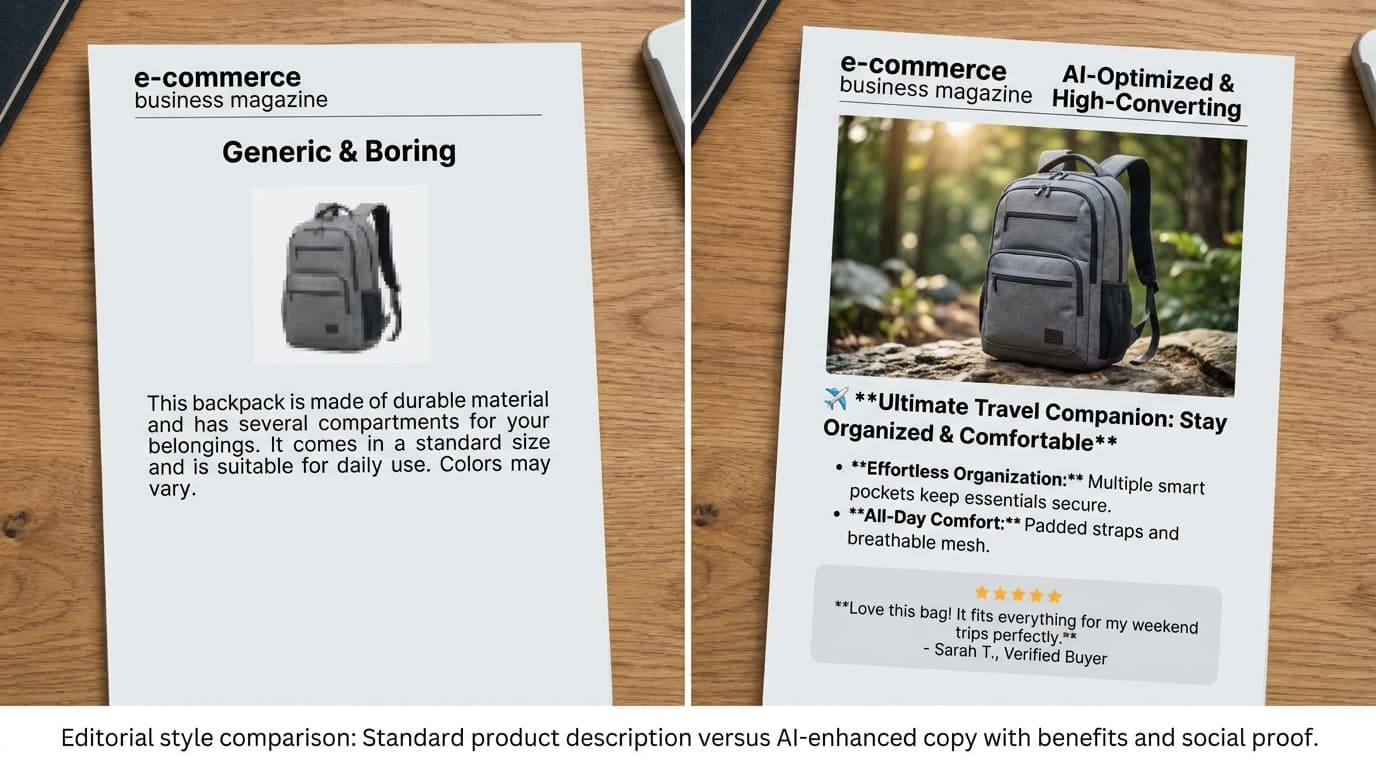
Example of an optimized listing structure:
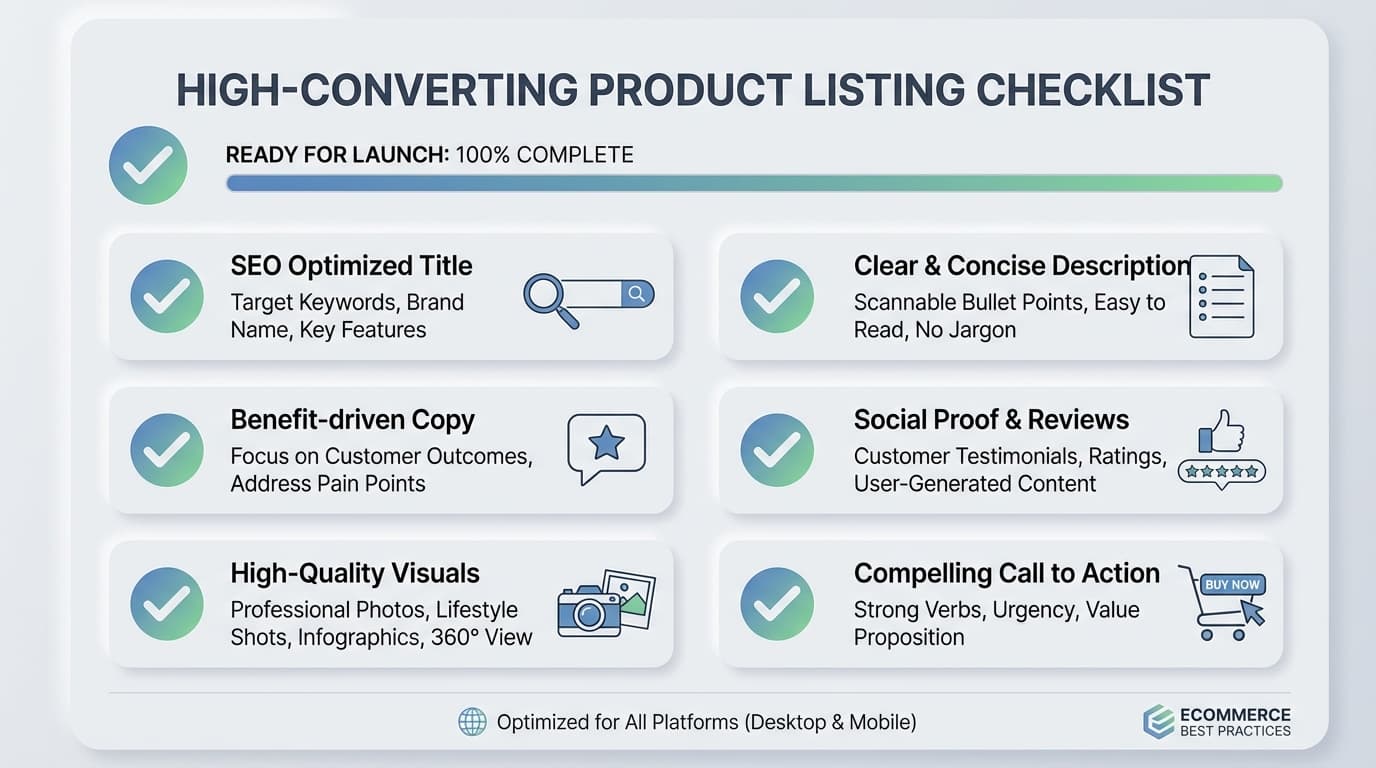
Before finishing a listing optimization, ensure it meets the following quality requirements:
Typical Error: Using the same description text for all color variants of a product, leading to keyword cannibalization and a poor user experience.
Optimizing product descriptions is an iterative process. Changing content is useless if you don't measure how it affects user behavior. To know if your eCommerce AI is doing a good job, you must set up controlled tests.
Step-by-step for your first content test:
Modern analytics tools and the use of language models allow for predicting which variants will perform best, but real validation will always come from your direct sales data. According to reports from Elementor, experiences that combine relevant content with technical interactivity are the ones that will lead profitability in 2025.
At ButterflAI, we help eCommerce teams automate the creation and improvement of thousands of product detail pages, ensuring that every title and description is optimized for SEO and conversion at scale in Shopify or your PIM. Our technology analyzes your current catalog and applies intelligent business rules so your team can move from manual editing to strategic validation in minutes.
Quick answers to common questions.
A practical playbook to generate product videos at scale using a 5-shot storyboard, AI generators, and a repeatable QA process.
Mar 3, 2026

Move beyond static images. Learn how to treat sizing as structured data to reduce returns, improve PDP conversion, and scale your catalog operations.
Feb 11, 2026

Operational playbook to convert Shopify/PIM attributes and metafields into reusable and scalable A+ modules.
Feb 4, 2026