
Catalog & Data Management
Google Shopping Feed Optimization: The QA Scorecard
A practical QA scorecard and weekly workflow to prevent Merchant Center disapprovals, optimize your product data, and scale catalog growth.
Mar 4, 2026
Read More
Practical guide to structuring your catalog data, optimizing Shopify mapping, and preparing your store for AI scaling.

The product datasheet is the asset that allows you to scale your catalog without breaking SEO or filters. It is the single source of truth connecting operations, marketing, and product teams for search, facets, and automated enrichment. Standardizing this document reduces operational errors and improves relevance in search engines; it aligns categories and attributes with the official Shopify Product Taxonomy to maintain consistency across channels.
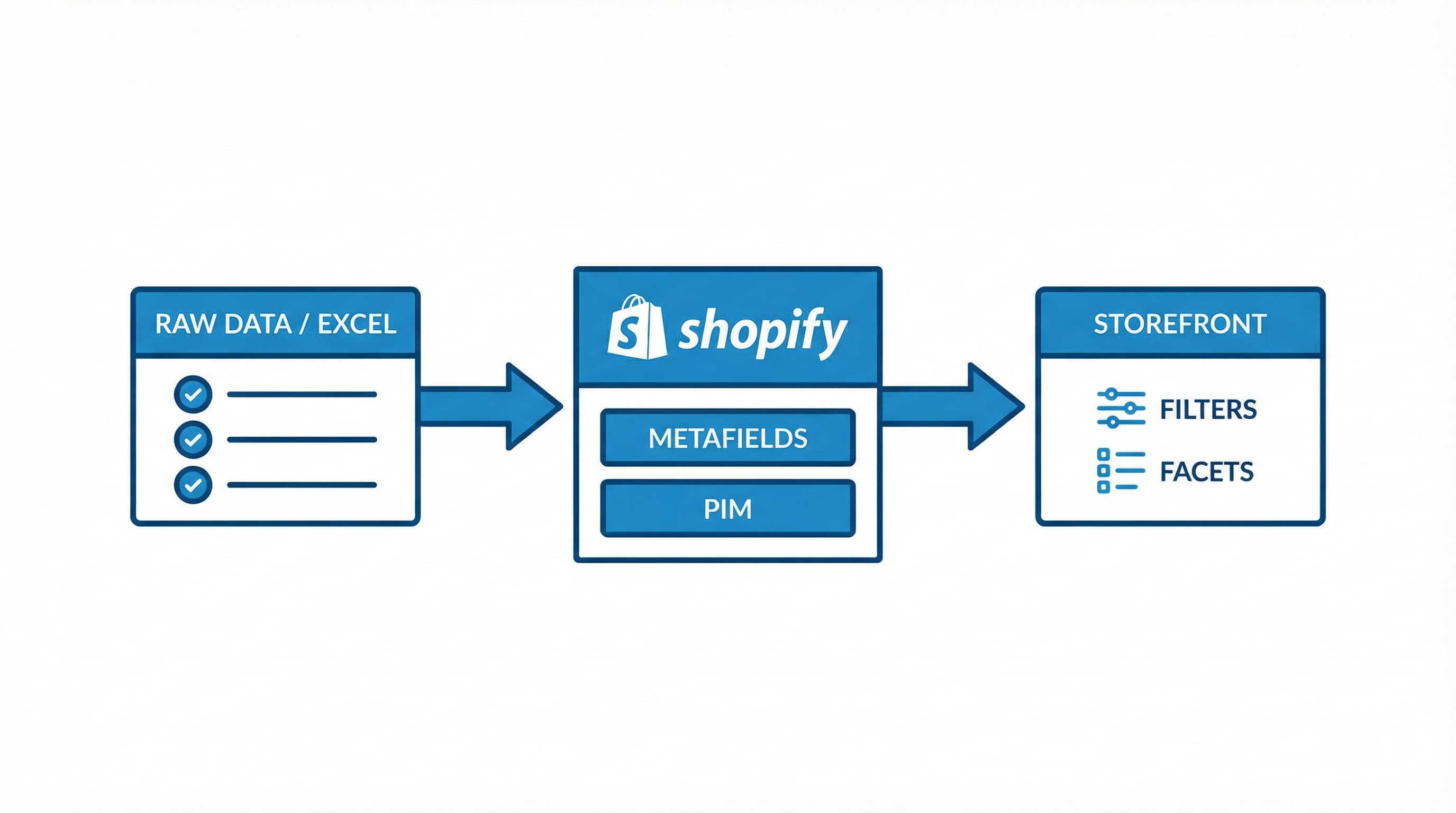
Choosing a minimum set of data prevents blocks during bulk imports and sustains the basic structure for SEO and navigation facets.
material field).To understand the implementation, it is vital to define the technical components that interact with your datasheet:
A pragmatic datasheet template must differentiate between a "minimum viable" model to publish quickly (Time-to-market) and an "optimal" model for conversion, advanced filters, and scaling with automation.
Without correct identifiers, there are no secure operations or traceability.
sku: CAM-12345, gtin: 840012345678.The text converts the user and positions products in search engines and collection lists.
short_title: Men's Technical T-Shirt, bullets: breathable fabric; quick dry.Filters and facets on Product Listing Pages (PLP) depend exclusively on structured attributes.
material_composition: polyester 90% polyurethane 10%.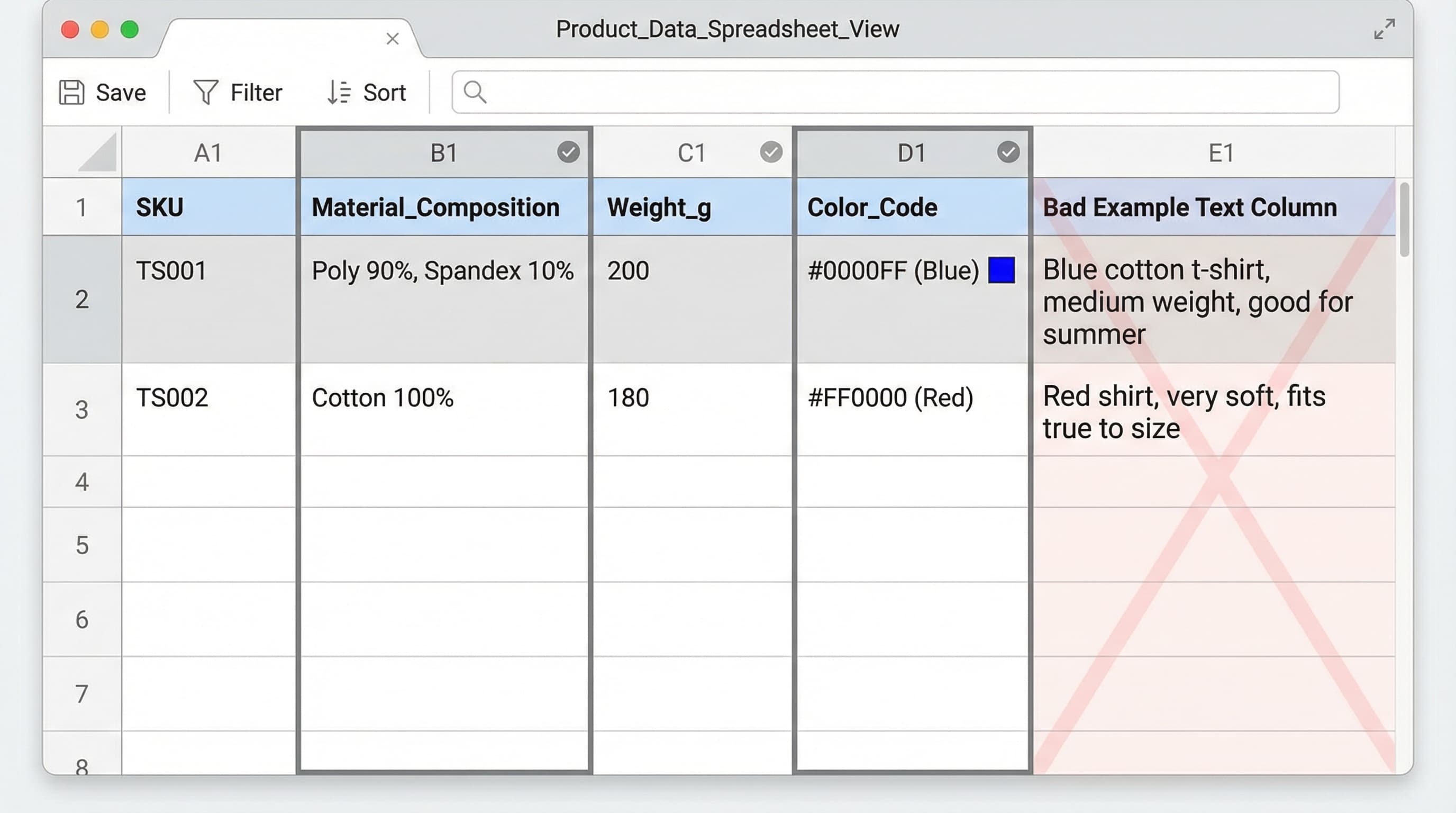
Optimized images improve conversion and Image SEO.
base_alt_text in a global field and add the distinctive variant.base_alt: Blue men's technical t-shirt model A.DSC001.jpg.Automated rules avoid catalog corruption before it reaches the store. A clean datasheet is the foundation for automation and AI to work.
Inconsistent names, SKUs, sizes, and colors break filters and cannibalize SEO.
['Navy Blue', 'Black', 'White'].Automatic checks prevent repetitive errors and broken products (404s or displaced layouts).
price > 0gtin must meet regex of 12 or 13 digits.short_description length between 50 and 160 characters.main_image cannot be empty.Incorrect mapping breaks templates, filters, and feeds. This section covers how to transfer your "perfect" Excel to the reality of Shopify.
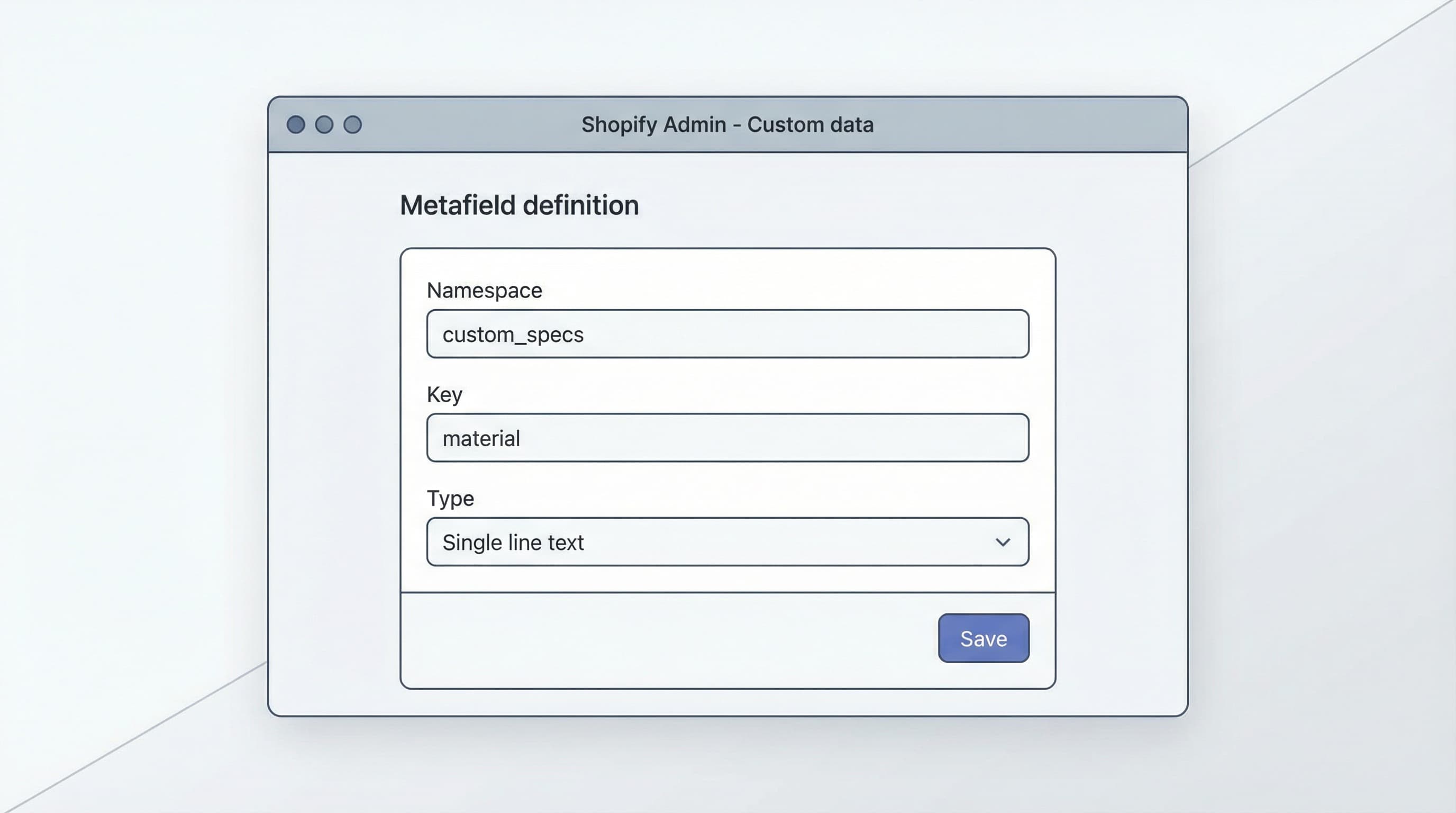
Before importing data, Shopify must know what to expect.
namespace, key, and type (text, number, reference, color) so values are consumable by the theme (Theme 2.0).custom_specs) and a legible name.Namespace: custom_specs, Key: material, Type: Single line text.CSV is the most robust way for bulk loads and ETL integrations.
Handle, Title, Body HTML, Vendor, Tags, Price) and separate columns for metafields.metafield.namespace.key (if your import app supports it) or the standard Shopify format.Handle: example-productTitle: Example Productmetafield.custom.material: Cottonmetafield.seo.description: Long description optimized for search engines...Do not blindly trust the native importer for complex metafield changes.

A well-designed datasheet is the raw material needed to scale content generation. Without structured data, AI hallucinates or generates generic content.
For an AI model to generate a rich and unique product description, it needs "reality anchors".
material, recommended_use, technology, sensation.material: Gore-Tex, the AI will write about waterproofing with precision.The template must be operable by automation processes.
length, width, height and a unit_of_measure column. This allows automation to detect if a specific dimension is missing or automatically convert units.This datasheet structure—with minimum vs. optimal levels and strict validation rules—is what separates a chaotic catalog from a scalable one. By implementing these data models and correct mappings to Shopify Metafields, you get immediate benefits: fewer errors in imports, reliable store filters, robust technical SEO, and a solid foundation for applying artificial intelligence to your content.
Maintaining a perfect datasheet and manually enriching thousands of products is an impossible task for teams with limited resources. The time spent cleaning CSVs and writing descriptions variant by variant slows down growth.
ButterflAI detects gaps in your technical information, generates missing attributes, and writes content optimized for SEO and conversion at scale, syncing directly with your Shopify Metafields. This ensures the quality of your listings without the manual work of data management.
Quick answers to common questions.
A practical QA scorecard and weekly workflow to prevent Merchant Center disapprovals, optimize your product data, and scale catalog growth.
Mar 4, 2026

Discover how to measure data quality in your ecommerce catalog using the 6 core dimensions, channel-specific scorecards, and continuous remediation loops.
Feb 26, 2026

Stop guessing with basic Etsy SEO tips. Map your catalog data to Etsy attributes, automate descriptions, and scale your listing optimization strategy systematically.
Feb 25, 2026
