
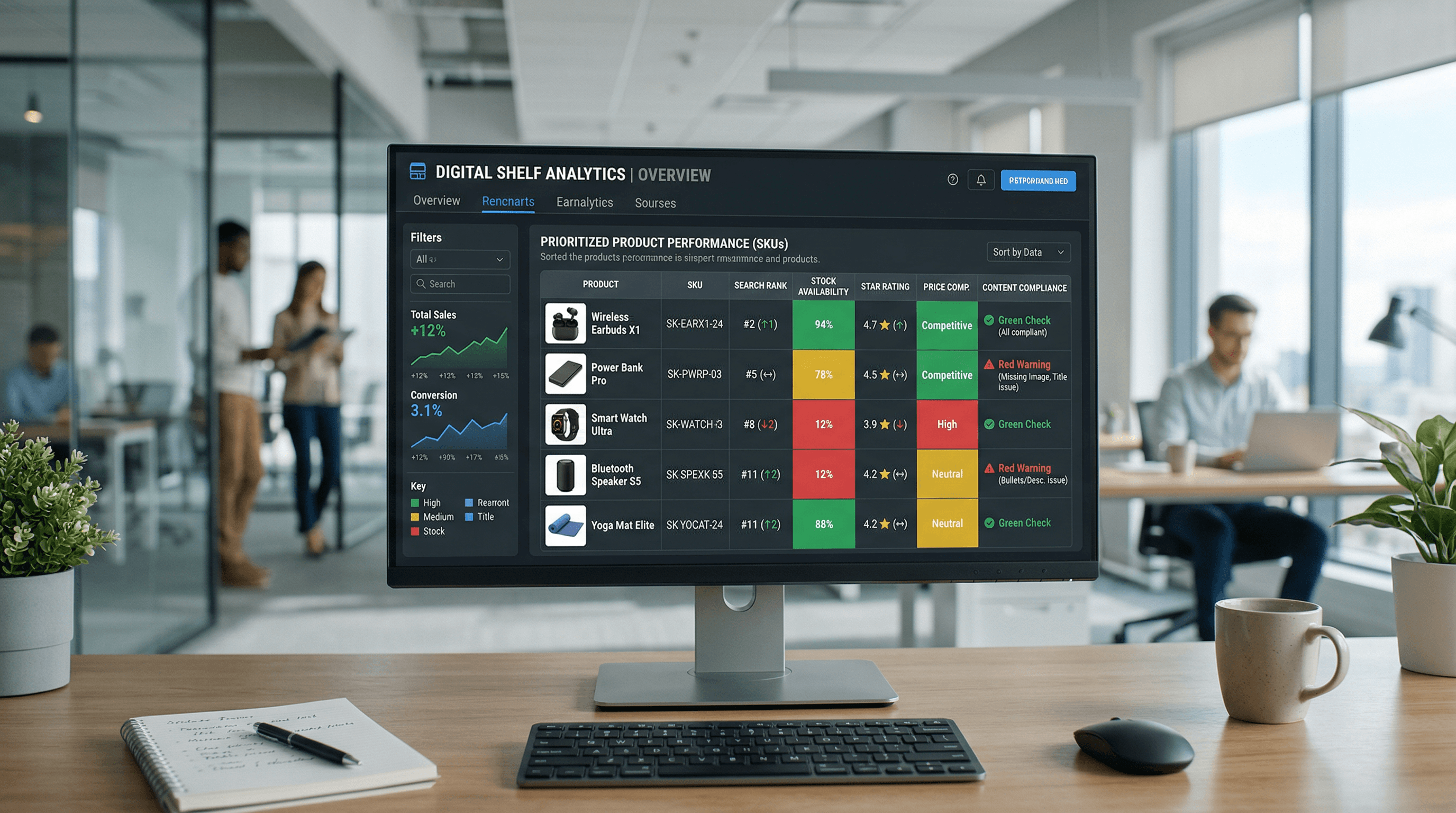
Ecommerce Operations
Digital Shelf Analytics: An Ops-First Playbook
Turn digital shelf signals like retail search ranking, product content compliance, and out-of-stock monitoring into a high-impact weekly sprint.
Feb 27, 2026
Read More
Optimize eCommerce reverse logistics by reducing return rates through the use of AI to improve data quality and product descriptions.
Managing eCommerce reverse logistics has become the primary operational bottleneck for digital brands seeking profitability. As sales volume grows, so does the flow of returned products, putting unsustainable pressure on profit margins and business sustainability.
Many teams face an endless cycle of processing returns, where errors in product information are the ignored root cause. If data quality is not addressed at the source, the eCommerce return rate will continue to drain financial resources and saturate warehouse logistics capacity.
In this article, you will learn how to implement an AI-driven content optimization framework to identify discrepancies in your listings and drastically reduce avoidable returns.
TL;DR: What you can do today
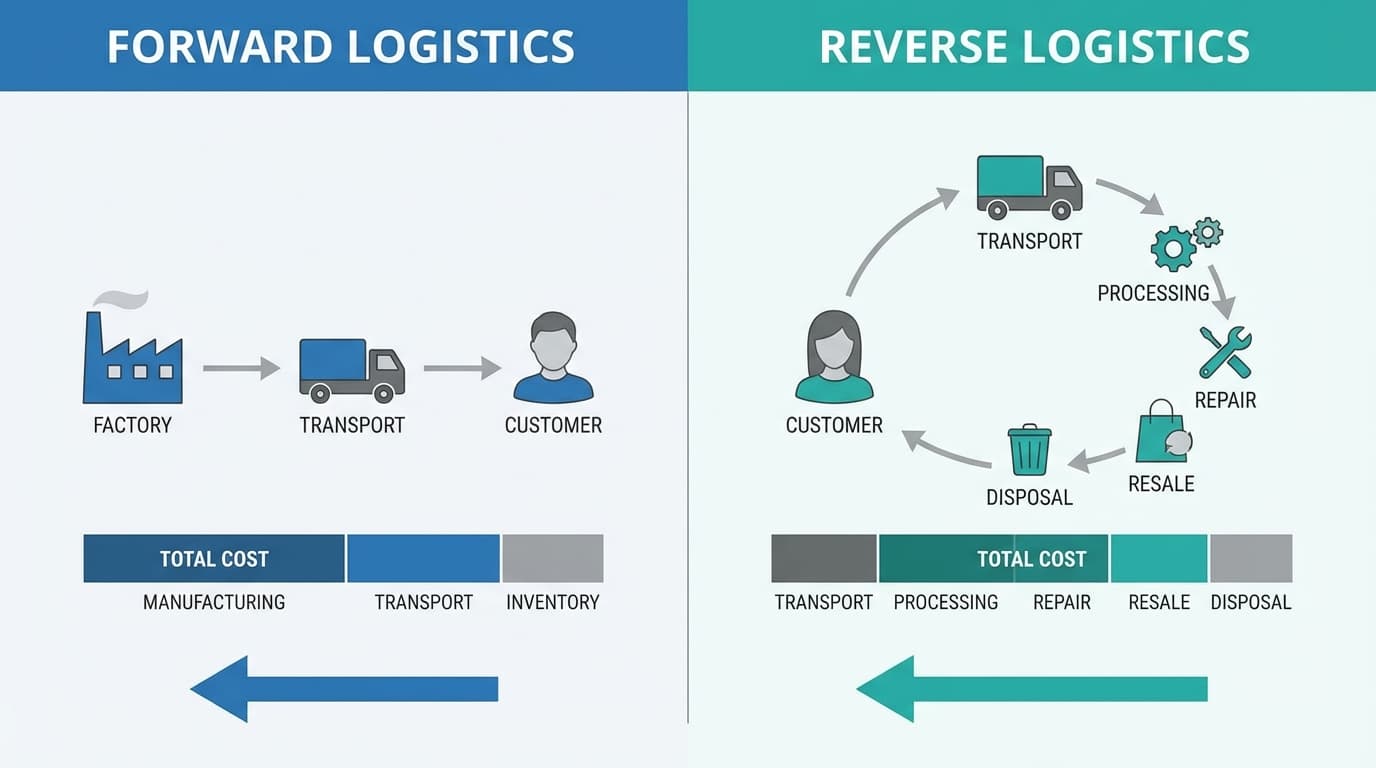
eCommerce reverse logistics is not just a transport challenge; it is a data challenge. According to recent reports on the European market, the cost of processing a return can represent up to 50% of the original product value when transport, inspection, refurbishment, and inventory value loss are added up. In markets like Spain, where eCommerce continues to grow at double digits, the average eCommerce return rate sits between 15% and 30% in sectors like fashion.
The real problem arises when marketing and operations teams work in silos. While marketing optimizes for conversion, operations suffers the consequences of unclear or misleading product descriptions. A title that omits a technical compatibility or an image that distorts the real color are direct triggers for a return.
To improve returns management, the first step is to understand why products are coming back. Most eCommerce platforms (such as Shopify or BigCommerce) allow you to categorize return reasons. If "not as expected" or "incorrect size" dominate your metrics, you have a content problem, not a product problem.
Data quality validation checklist:
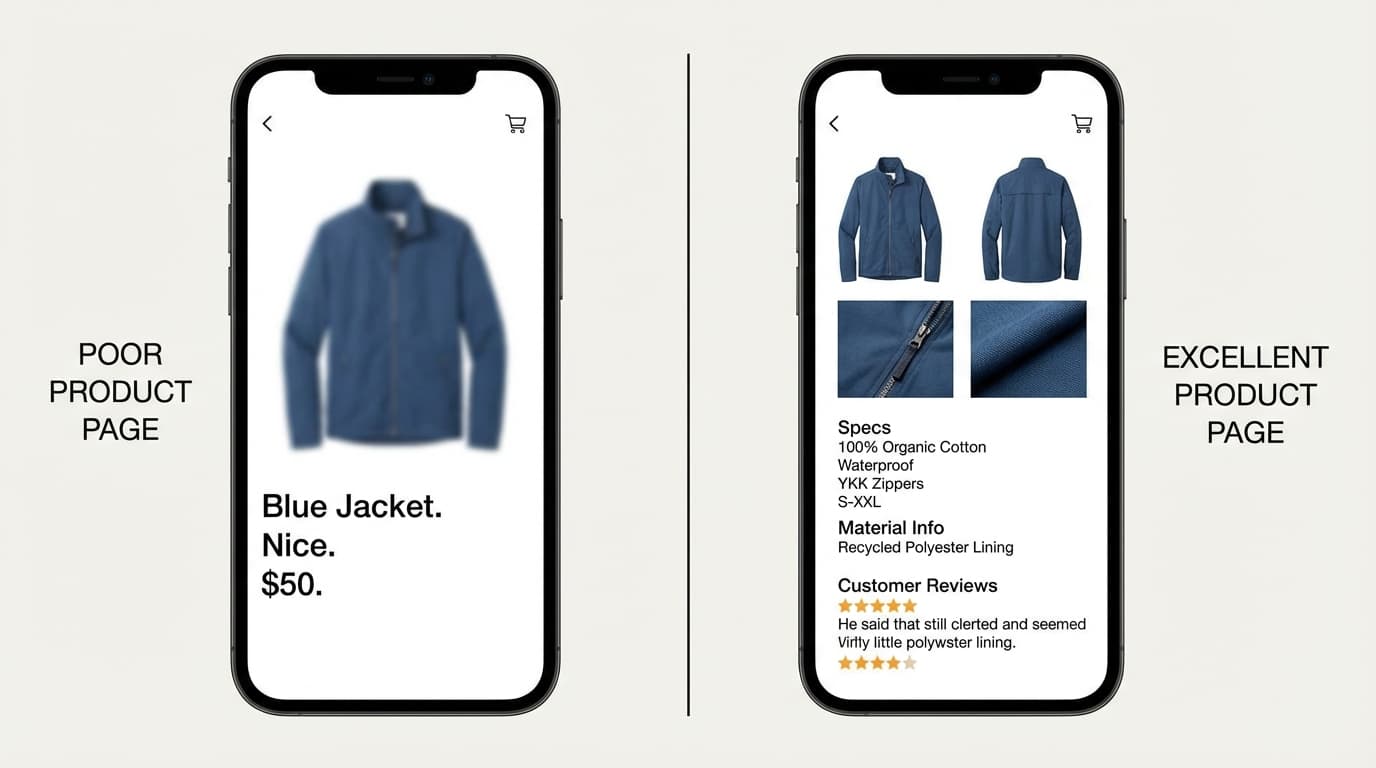
Catalog automation through AI allows for the analysis of thousands of SKUs in minutes to find inconsistencies that a human would take weeks to detect. AI does not just write; it validates. It can compare information from a manufacturer's technical PDF with the description published in your online store and point out contradictions.
For example, one of the biggest causes of returns in electronics is the lack of details regarding connectivity. A trained AI can review your product descriptions and ensure that every charger, cable, or peripheral clearly specifies its voltages and port types, aligning customer expectations with physical reality.
Not all products require the same level of attention. To optimize your online store return policy, you must prioritize those SKUs that are destroying your margin.
Use a Pareto analysis to identify the 20% of your products that generate 80% of returns. This group is your absolute priority for eCommerce data quality.
Verify if the information on your Shopify or Marketplace matches the ERP or the supplier's catalog. A common error is that weight or dimensions change in a new version of the product but are not updated on the web.
Open text fields are dangerous. Use Shopify metafields or structured attributes in your PIM to normalize data like "Material", "Season", or "Fit Type". This not only improves SEO but also reduces interpretation errors.
Establish a process where the customer service team reports the top 5 most frequent pre-purchase doubts weekly. If a customer has to ask, it means the information is not clear on the product page.
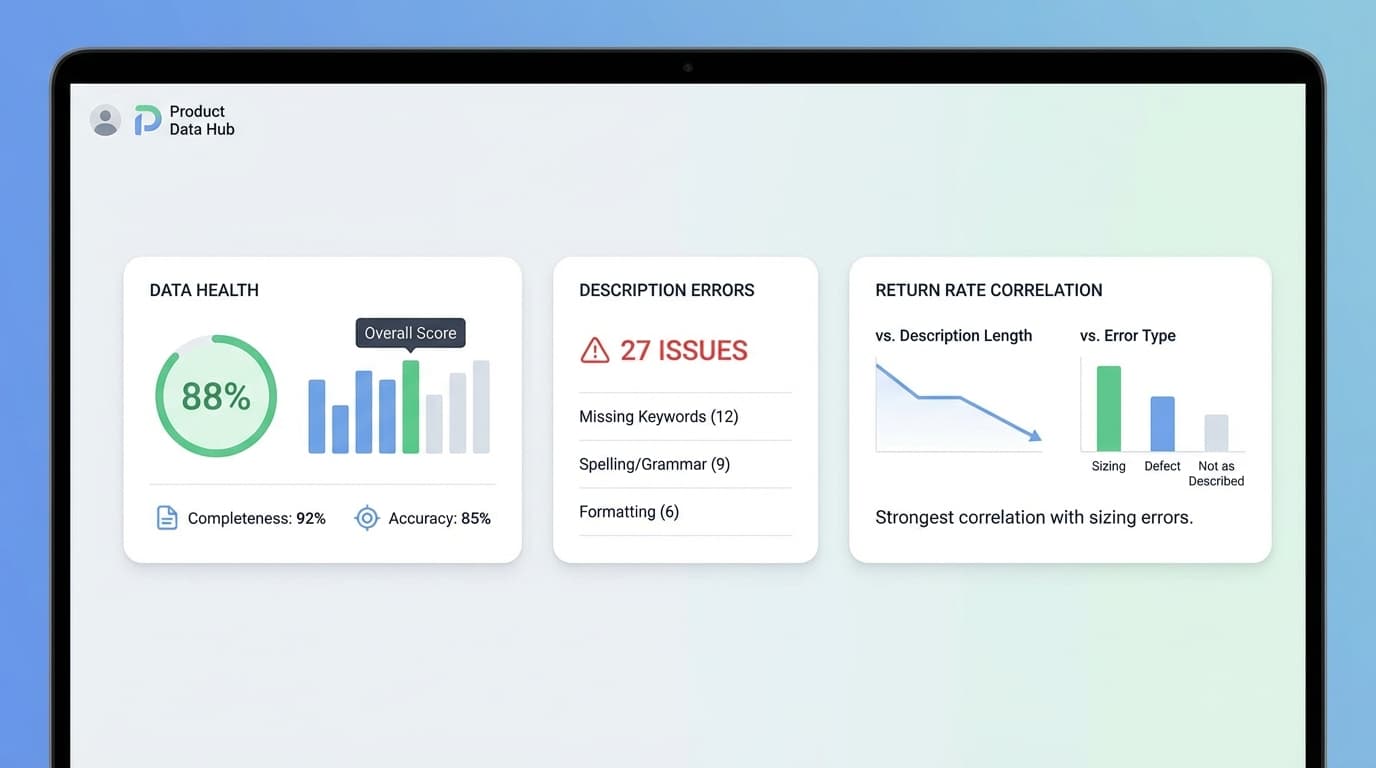
Profitability in modern eCommerce is played in the cents of logistics. By improving eCommerce data quality, you not only reduce the direct cost of return transport but also protect the value of your inventory. A product that travels three times (out-back-out) is much more likely to suffer damage to the packaging or the item itself, leaving it out of stock for a subsequent sale.
Sources like Ecommerce News and Statista confirm that personalization and clarity in product information are the factors that most influence consumer trust and, therefore, the reduction of reverse logistics.
At ButterflAI, we help eCommerce teams automatically detect discrepancies and empty fields across thousands of products simultaneously. Our AI technology analyzes your listings to ensure that eCommerce reverse logistics decrease thanks to impeccable and consistent product information across all channels.
Quick answers to common questions.
Turn digital shelf signals like retail search ranking, product content compliance, and out-of-stock monitoring into a high-impact weekly sprint.
Feb 27, 2026
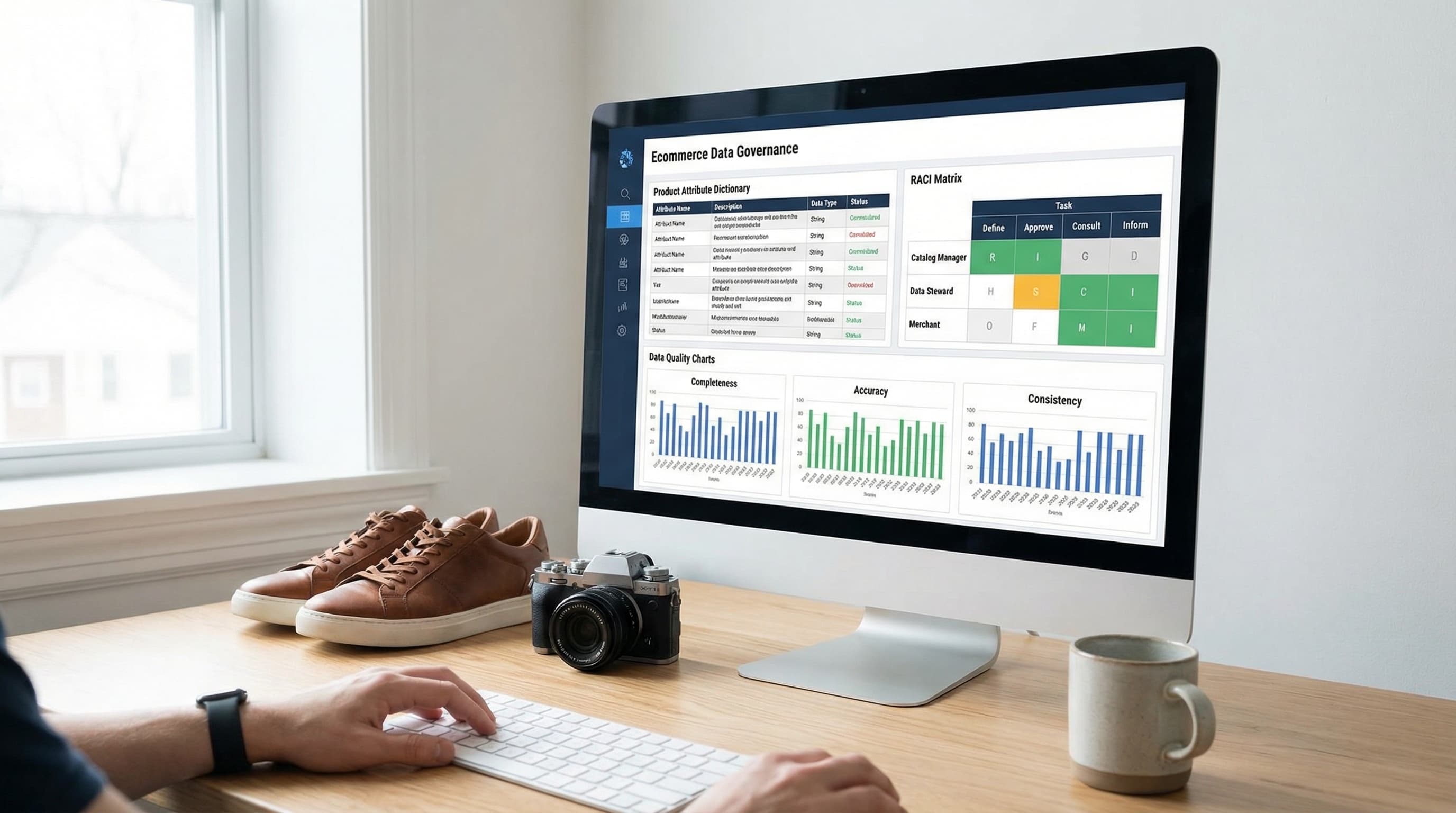
A practical data governance framework template to stop feed rejections, fix filter chaos, and organize your ecommerce product data in 30 days.
Feb 22, 2026

Master the math and data operations behind product bundling to increase AOV without eroding your margins or creating catalog chaos.
Feb 9, 2026