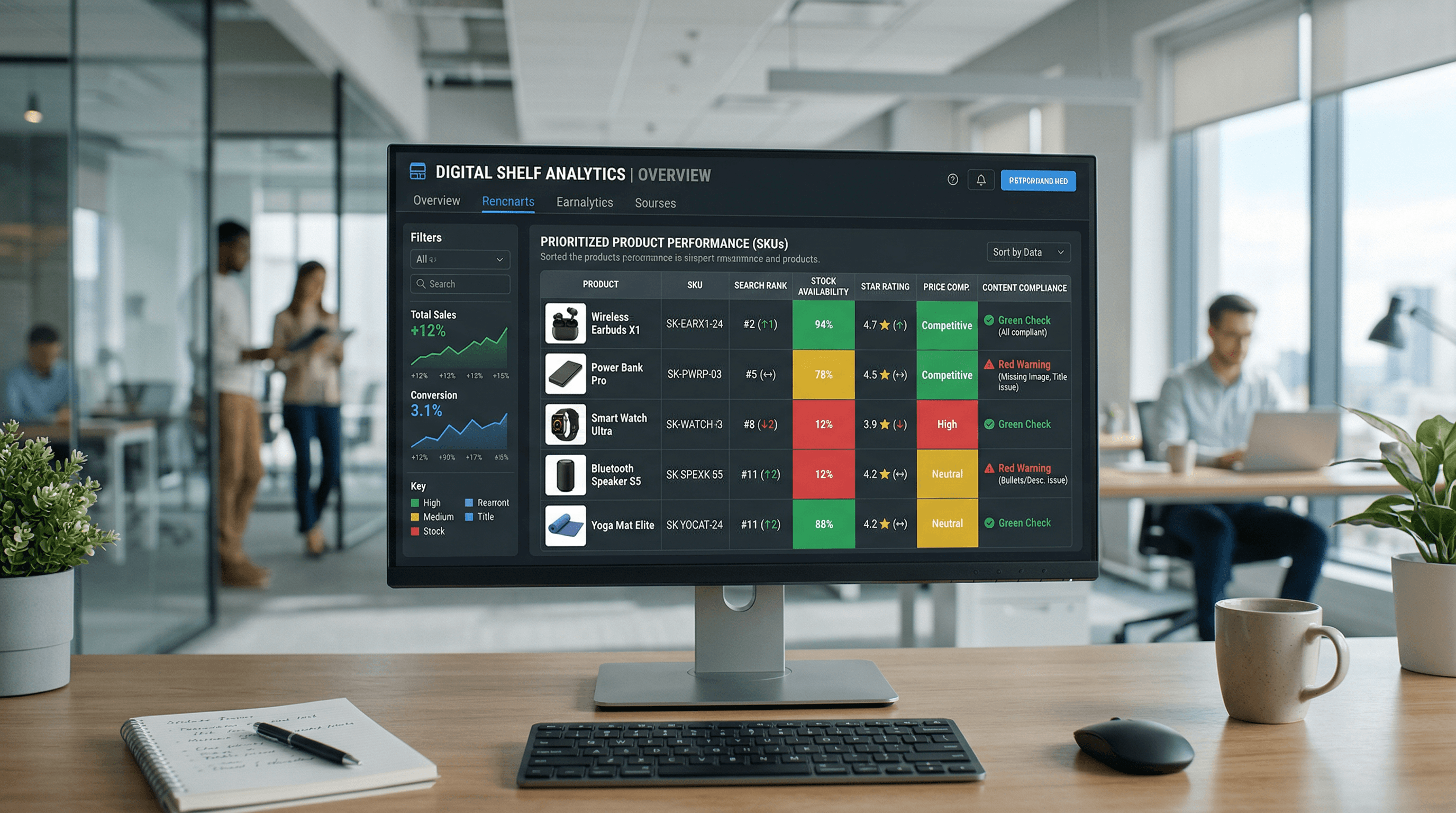
Ecommerce Operations
Digital Shelf Analytics: An Ops-First Playbook
Turn digital shelf signals like retail search ranking, product content compliance, and out-of-stock monitoring into a high-impact weekly sprint.
Feb 27, 2026
Read More
Master the math and data operations behind product bundling to increase AOV without eroding your margins or creating catalog chaos.

Bundle pricing is not just a marketing line; it is the result of layered unit economics. To get it right, start by calculating the contribution per SKU, then add expected returns and extra fulfillment costs before setting a discount that meets an Average Order Value (AOV) or inventory goal.
Step 1: Compute contribution
Contribution matters because it shows how much each SKU leaves to cover fixed costs and margin. Compute contribution by subtracting unit cost and direct channel fees from the selling price for each SKU, then sum these contributions to get the bundle starting point.
Step 2: Add returns and fulfillment cost
Bundles change return behavior and packing complexity, which increases variable cost. Estimate a return rate for the bundle using category history, then prorate the expected return cost across SKUs. Add a pick/pack or kitting surcharge per order to the bundle contribution.
Step 3: Apply target discount
The discount must be solved against a target contribution margin or an inventory reduction goal. Decide whether the bundle is margin-neutral or inventory-driven, then compute the discount that yields your target contribution and record the expected margin for reporting.
Operational Note: PIM (Product Information Management) is a central system to store bundle composition and attributes to avoid SKU chaos. Shopify metafields enable custom fields on product records and attaching bundle composition.
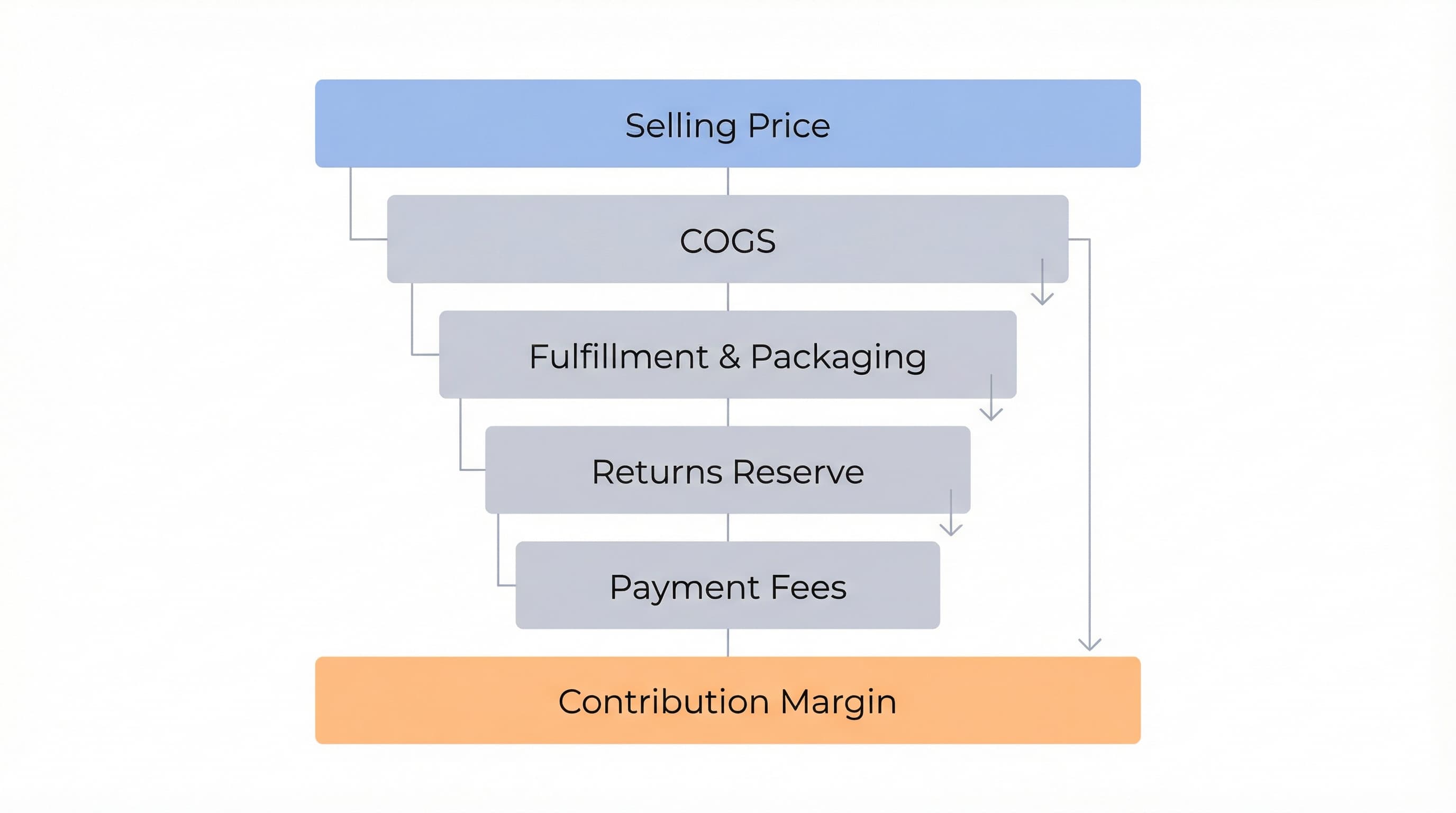
Calculating bundle price requires a strict cost-first approach so headline discounts do not erode margin. This section breaks the cost stack into concrete inputs you can store in a PIM or a CSV-based bundle data model and gives a practical break-even discount formula operations teams can apply.
Start by summing all variable costs per bundle, then add a returns reserve and allocated overhead. The objective is to find the minimum price that preserves your target gross margin after discount and return friction.
Why it matters: COGS is the unit purchase cost or production cost, and it drives all profitable pricing decisions.
How to approach: Record COGS at the SKU level in your catalog source so you can sum accurate bundle totals. Multiply each SKU COGS by the quantity included in the bundle and use that sum as the first cost line. Do not use retail or list price as a proxy for cost.
Why it matters: Fulfillment and payment fees move with orders and must be allocated per bundle.
How to approach: Add per-order fixed pick and pack costs plus per-item handling. Include packaging and an average postage or fulfillment charge per bundle. For payment fees, add the percentage fee plus fixed cents per order and allocate that to the bundle price.
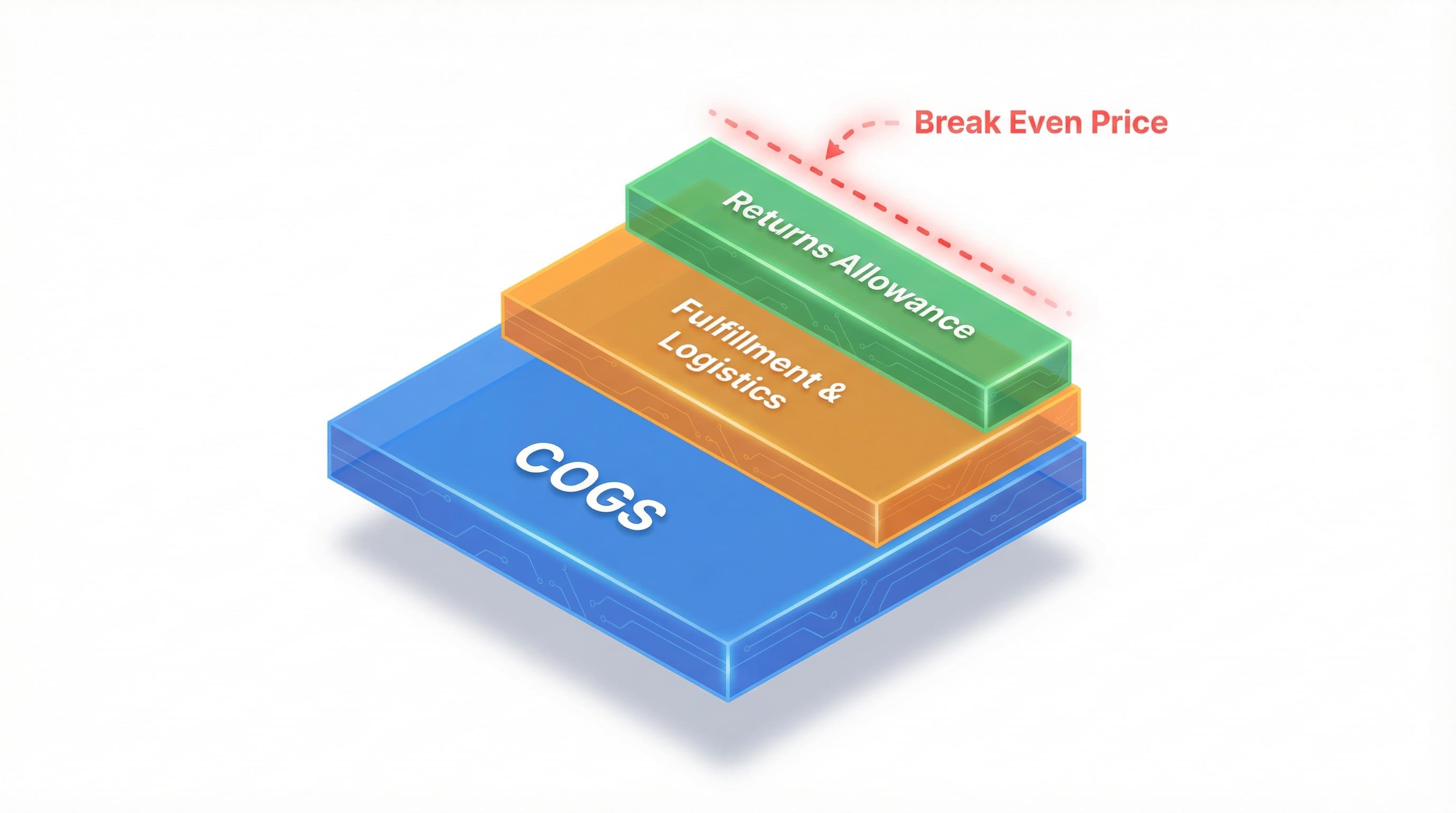
Why it matters: Returns and resale loss reduce effective margin and must be estimated and reserved for.
How to approach: Estimate a return rate for the category and multiply by the expected resale recovery after returns. Public industry summaries show online return rates vary by category and can be material in apparel sectors; see a public industry overview for guidance.
Why it matters: The break-even discount is the maximum percent off you can offer without dropping below target margin.
How to approach: Compute bundle cost total as the sum of COGS, fulfillment, payment reserve, and allocated overhead. Set a target gross margin percent and solve for the minimum price P where P - bundle cost = target margin * P. Practically, compute required price as bundle cost / (1 - target margin) then compare the planned discounted price to that threshold.
Operational Note: Record all inputs in a PIM field or in a simple CSV bundle data model so updates flow to feeds and avoid creating extraneous SKUs.
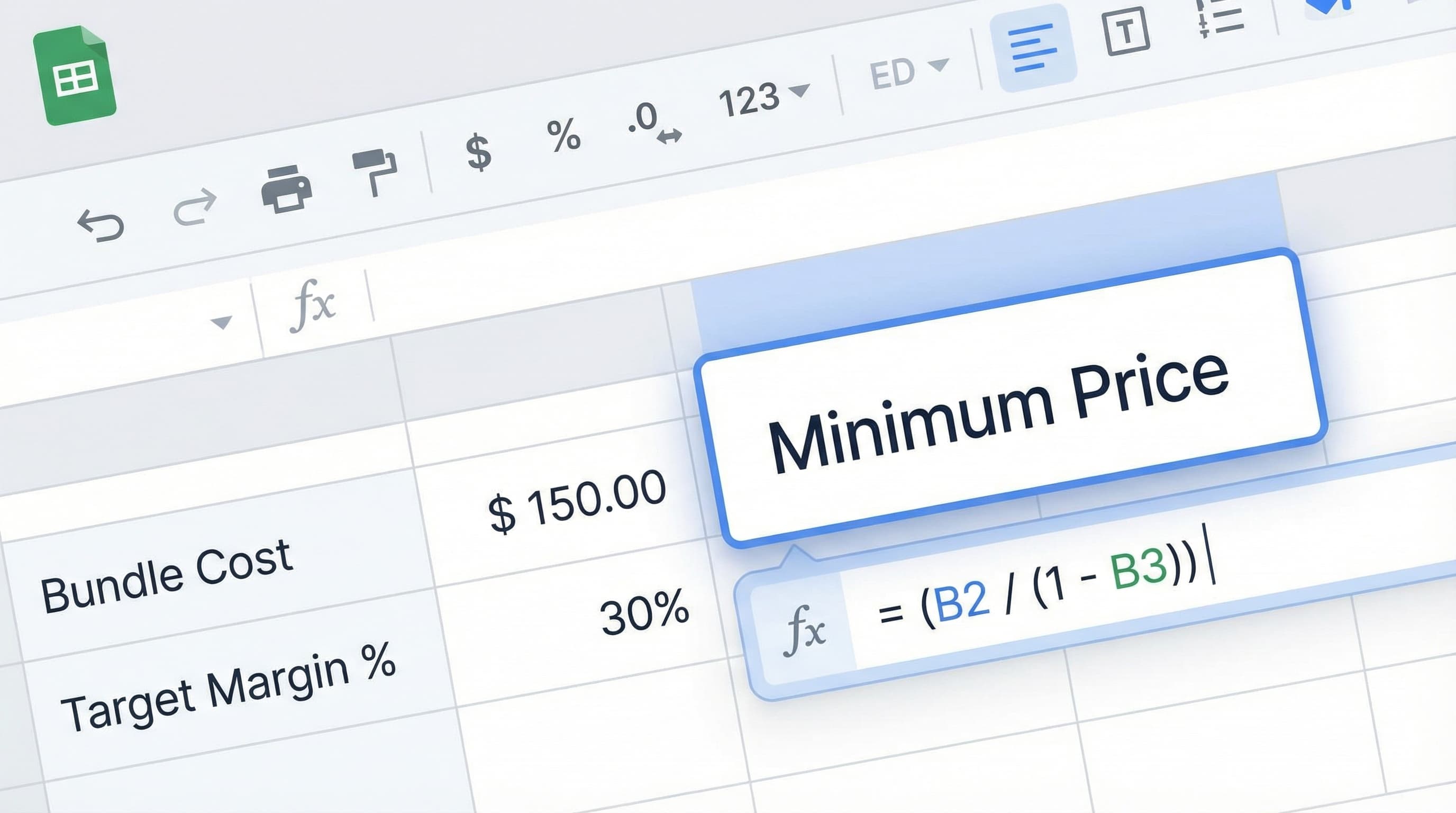
Getting a bundle price right begins with a numbers-first approach. Choose a model that fits your margin profile, fulfillment dynamics, and catalog goals so AOV increases without margin erosion or SKU and SEO chaos.
Use one repeatable formula that teams can run in a PIM or a flat CSV:
Bundle Price = Sum of Item Retail Prices - Planned Discount - Allocated Added Costs
Added costs should include incremental fulfillment cost, an expected returns reserve, and any promotional fees.
Explaining and storing these values prevents ad hoc SKU creation.
Context: This is the simplest model and useful when speed to market and conversion clarity are priorities.
How to approach: Compute bundle COGS as the weighted sum of item COGS, add a per-order fulfillment buffer and a returns reserve, then apply a fixed percent or fixed amount discount that preserves target margin. Implement the math as a PIM field or CSV column so merchandising and finance can audit before publish.
Context: Use this when perceived utility can justify a small or no price reduction.
How to approach: Pair a high-margin hero with a low-cost accessory or a service and allocate accessory COGS only when the bundle sells. Highlight combined value in images and copy so conversion lift is measurable and margin remains visible.
Context: Tiered pricing nudges customers toward higher spend without broad cuts to single item prices.
How to approach: Define thresholds such as "Buy 2 get 10%" or "Buy 3 get 20%" and model margin per tier using historical attach rates. Use tiers as anchors in merchandising and cart UX. For benchmarks, you can reference Glew's bundle pricing guide.
Context: Dynamic pricing works when you have reliable inventory and customer data to personalize offers.
How to approach: Apply simple rules that adjust discount by inventory days left, margin band, or customer value. Limit rule count and document rules in the PIM. Prefer cart-level application to avoid creating unique product pages for every rule and fragmenting SEO.
Start with the math. When you set a bundle price, you need a compact data model that links the bundle parent to its component SKUs, keeps inventory accurate, and preserves SEO. This section gives a practical structure you can implement in a PIM or Shopify using metafields and a small CSV export.
A short, consistent bundle data model prevents SKU proliferation and pricing errors. Implement a parent SKU record that references component SKUs, component quantities, and component costs so the bundle price can be validated automatically.
Parent SKU record
parent_sku, title, bundle_type, published_flag.BNDL001 with metafield components skuA:1, skuB:2.Component mapping
skuA|2|5.00|0.2|false;skuB|1|10.00|0.5|true.Inventory sync and fulfillment
min(5, 3) = 3.Preventing SEO cannibalization while scaling bundles starts with treating the bundle price as a signal, not a separate silo. When teams launch many bundles in pursuit of higher AOV, they risk duplicate titles, overlapping keywords, and diluted organic rankings unless content and catalog data rules are enforced across product and bundle pages.
Set a clear ranking priority matrix that places the single product page above the bundle page for product-level queries, and the bundle page above single products for bundle-intent queries. This avoids mixed signals that cause cannibalization and preserves margin-focused traffic.
Canonicalization and index control
rel="canonical" from bundle pages to the single product page only when the bundle adds no meaningful unique content. Otherwise, canonicalize to the bundle when the bundle has unique merchandising copy and reviews. Monitor canonical conflicts in Google Search Console and crawlers like Screaming Frog.Single source bundle data model
bundle_type field with values mix-and-save or curated-set.Title and content templates
noindex on temporary promo bundles and canonical rules for permanent bundles.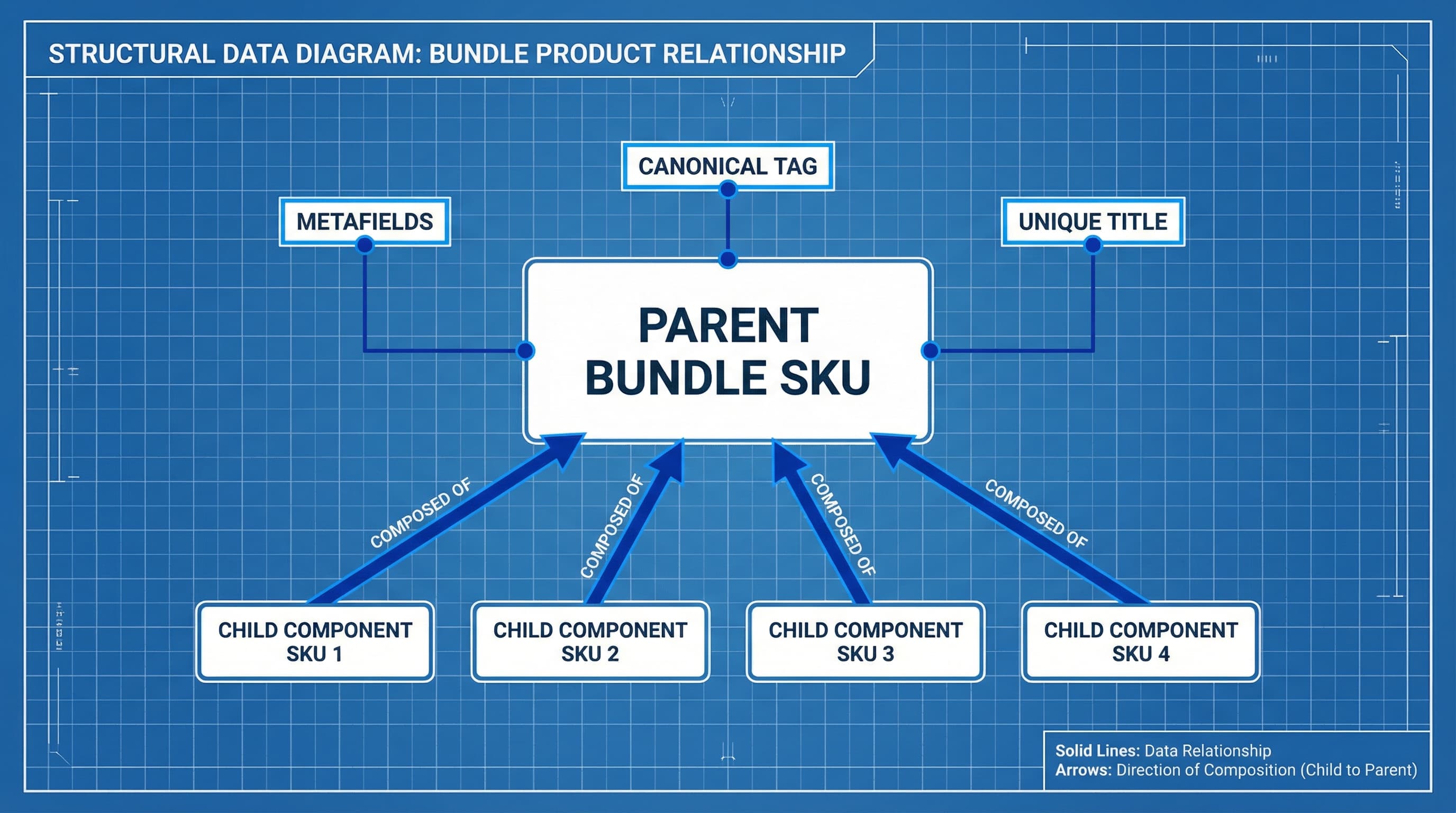
Scaling profitable bundles often fails when catalog data lives in scattered CSVs and Shopify metafields are managed manually. ButterflAI detects your component SKU relationships and centralizes the bundle data model, ensuring that pricing logic, inventory sync, and SEO content guardrails are generated automatically and consistently across your store.
Go deeper with guides and tools connected to this topic.
Quick answers to common questions.
Turn digital shelf signals like retail search ranking, product content compliance, and out-of-stock monitoring into a high-impact weekly sprint.
Feb 27, 2026
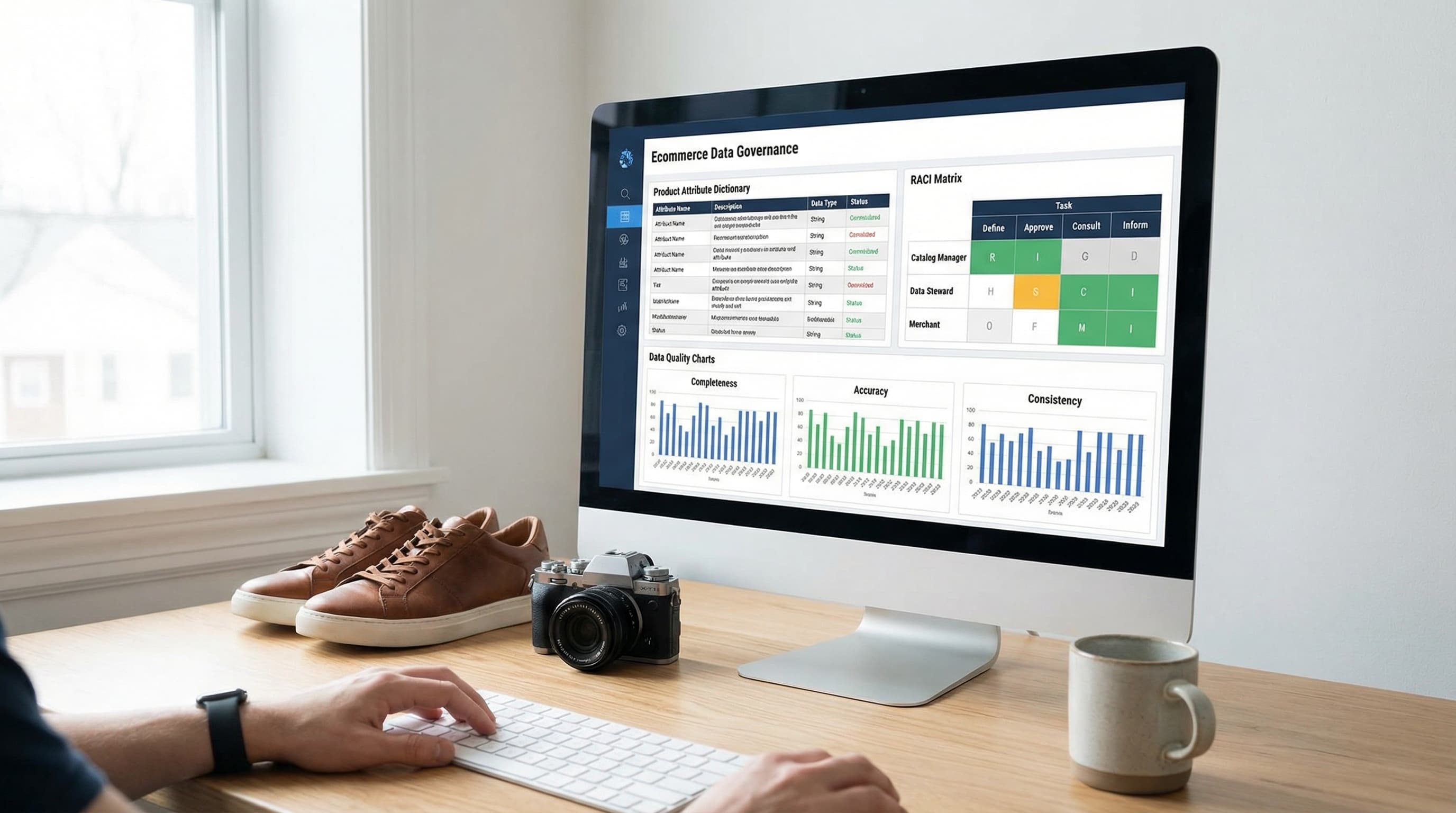
A practical data governance framework template to stop feed rejections, fix filter chaos, and organize your ecommerce product data in 30 days.
Feb 22, 2026

Operational guide to mastering product bulk edits, variant mapping, and metafield management without breaking your store.
Jan 28, 2026
