
Catalog & Data Management
Google Shopping Feed Optimization: The QA Scorecard
A practical QA scorecard and weekly workflow to prevent Merchant Center disapprovals, optimize your product data, and scale catalog growth.
Mar 4, 2026
Read More
Learn how to build a KPI-weighted scorecard and weekly sprint workflow to turn product data quality into a prioritized backlog for better feed approvals and CVR.

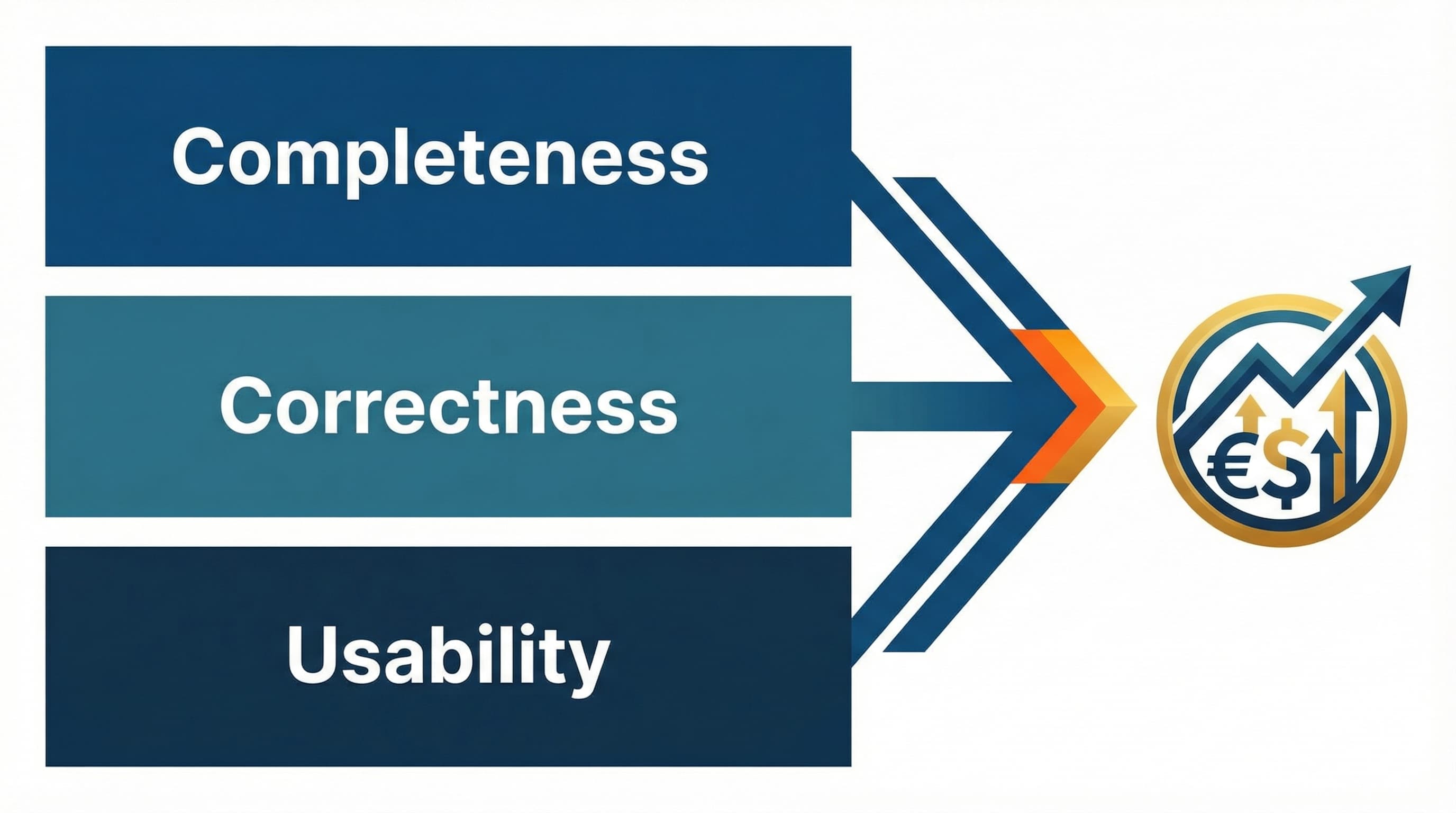
Product data optimization transforms raw catalog attributes into prioritized actions that drive measurable revenue. Instead of treating catalog management as a generic cleanup task, focus on the three foundational layers of data quality: completeness, correctness, and usability for both algorithms and customers. This framework clarifies what to fix first, allowing ecommerce teams to move from noisy, unmanageable catalogs to highly prioritized, revenue-generating sprints.
Before building a scorecard, it is essential to align on the technical infrastructure that houses your catalog data:
Every attribute in your catalog should map directly to a business outcome. Here is how data quality layers impact key performance indicators:
Missing or malformed discoverable fields drastically reduce your chances of appearing in search queries and category filters. Addressing visibility maximizes total impressions and organic discovery.
Even with high visibility, listings must earn the click through clear titles, optimized primary images, and compelling short descriptions. Standardize image aspect ratios and title templates per channel, and monitor your CTR after deploying fixes.
Conversion depends heavily on reducing buyer uncertainty with complete technical attributes and benefit-driven copy. Use attribute completeness scoring to prioritize high-traffic SKUs for immediate enrichment.
Accurate size charts, material definitions, and care instructions actively reduce returns and support volume. Map your most common return reasons to missing attributes and fix the root cause in the source system.
Attribute mapping is the structural bridge between your source fields and your channel targets. It determines feed approvals, onsite discovery, and ultimately, conversion. Because different channels rely on different data points, prioritizing what to fix requires understanding channel criticality.
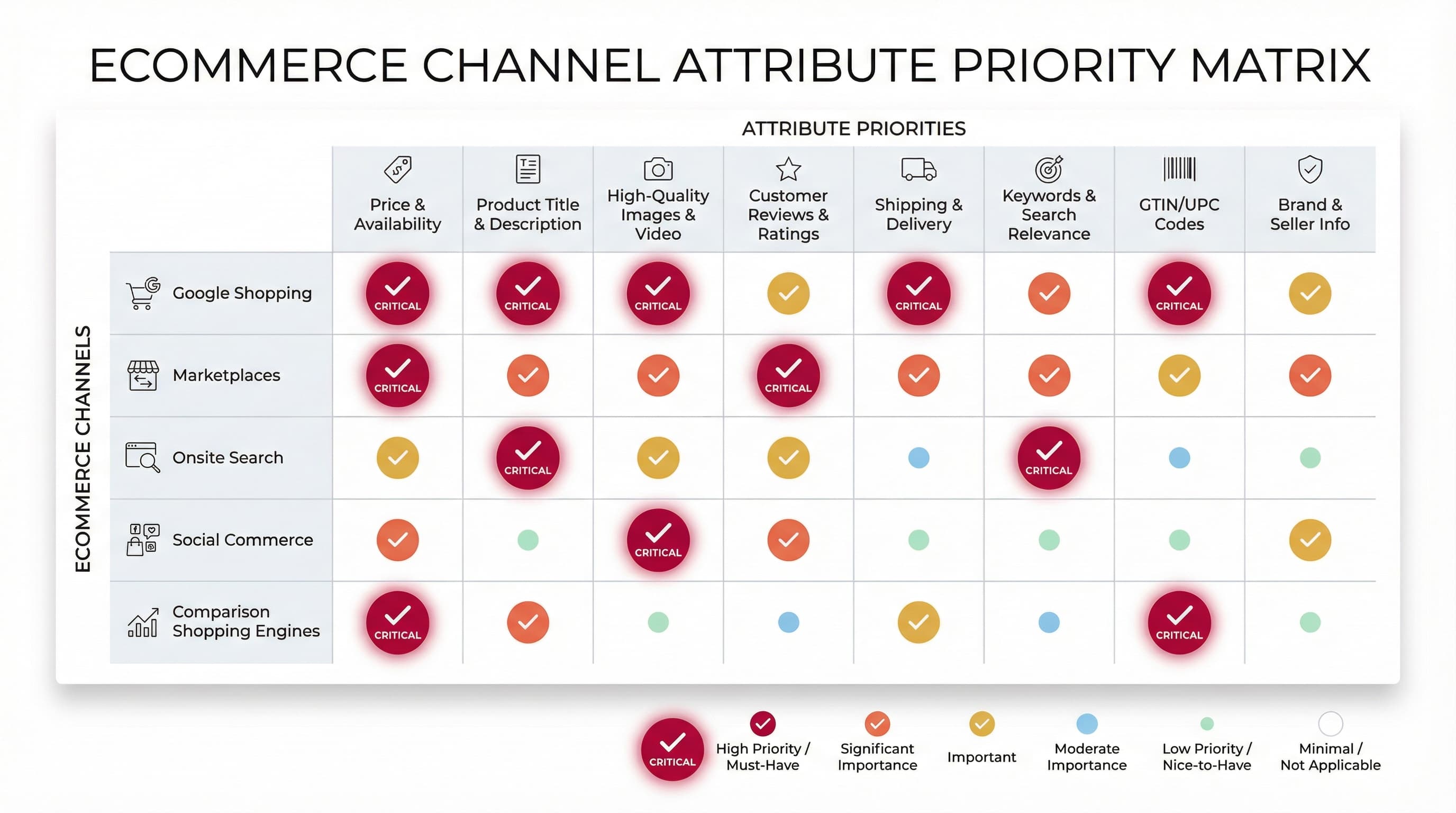
Focus on attributes that directly act as blockers for approvals or drivers for conversion:
| Channel | High Priority Attributes | Why it Matters |
|---|---|---|
| Google Shopping | Title, Price, GTIN, Brand, Image | Directly dictates feed approval and ad relevance. |
| Marketplaces | Title, Bullets, Backend search terms, Category | Determines ranking algorithms and discoverability. |
| Onsite Search | Category tags, Structured attributes | Powers faceted filters, discovery, and onsite CTR. |
| Email & CRM | Image, Short description, Price | Crucial for rendering and dynamic personalization. |
Follow this actionable workflow to ensure channel compliance:
Typical Error: Treating all attributes as equal priority instead of isolating blockers and conversion drivers.
Product Data Optimization turns raw attributes into revenue signals when you measure what matters and act systematically. Building a KPI-weighted scorecard converts vague data quality gaps into a prioritized backlog.
Tier-one attributes control channel acceptance and dictate customer choice. Focus on a short list: brand, GTIN, model number, size, and primary image.
Simple, auditable metrics make prioritization objective and repeatable. Compute each metric per attribute and per channel using queries in your PIM or feed pipeline.
Not all attributes equal revenue impact or policy risk. Assign weights based on three pillars:
Teams need a repeatable way to convert quality scores into a weekly fix list focused on revenue impact. This method turns raw SKU-by-attribute scores into channel-specific priorities, assigning clear owners for each rule.
Start by mapping score components directly to ROI impact. For each rule, capture the lead metric (e.g., feed approval rate, onsite discovery, conversion rate) and the estimated revenue delta per failed SKU. Normalize the scores to a common scale and compute a weighted priority using the KPIs agreed upon with stakeholders. Your output should be rows at the SKU-by-attribute level containing the priority score, the affected channel, and a suggested fix.
Every optimization effort requires clear accountability:
Execute this playbook to convert scorecard insights into measurable outcomes:
Typical Error: Over-prioritizing easily fixed cosmetic issues that yield little to no revenue impact. Always focus on high-impact, tier-one attributes first.
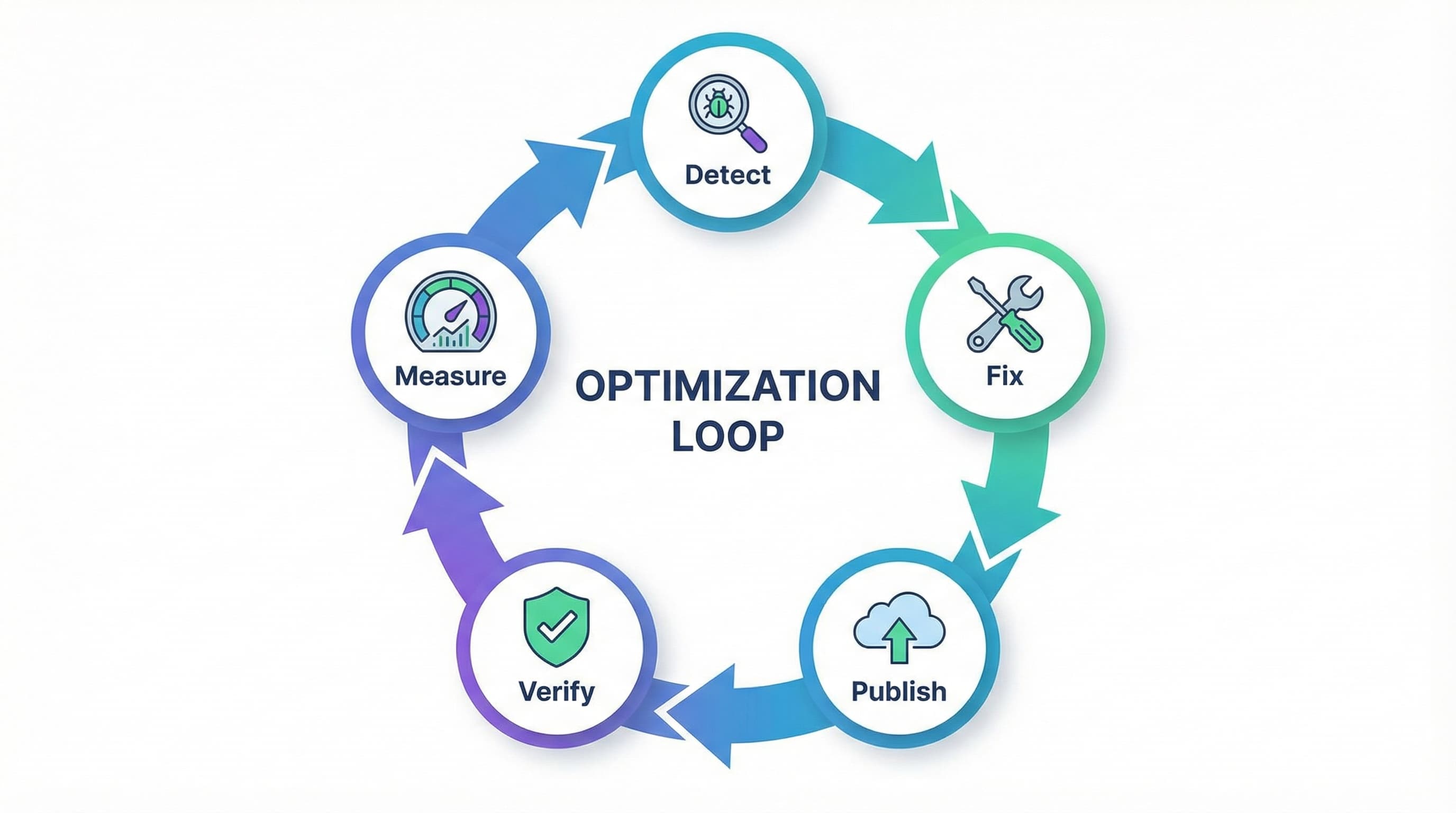
Product data optimization must become a weekly, measurable habit to improve feed approvals and conversion performance without boiling the ocean. This sprint converts detection, remediation, publishing, verification, and measurement into a systematic five-step loop that limits the blast radius of errors and creates a steady flow of validated wins.
Rapid detection focuses effort on items that block approvals or reduce discoverability. Use automated feed checks, diagnostic dashboards, and targeted search queries to locate missing attributes and validation errors.
Small, reversible fixes reduce risk and speed up verification. Apply changes via bulk edits in your PIM or staged Shopify metafield updates. Always record a short change log entry with the owner and intent for every patch.
Publish atomically per channel using a staging feed and a queued release window. Push to a staging feed first and validate using channel processing reports and schema validation tools. Monitor initial processing carefully and keep a rollback ready.
Verification combines automated reporting and human QA sampling. Sample 1% of the changed SKUs, run onsite search queries to validate indexing, and compare the KPIs from your scorecard (feed approval rate, CTR, and CVR).
Deployment Checklist:
A Data-to-Revenue Scorecard drives prioritization and tells you exactly what to automate first so that AI efforts deliver measurable lift. Automate high-volume, deterministic tasks for faster ROI, and reserve Human-in-the-Loop (HITL) for edge cases that affect conversion or compliance.
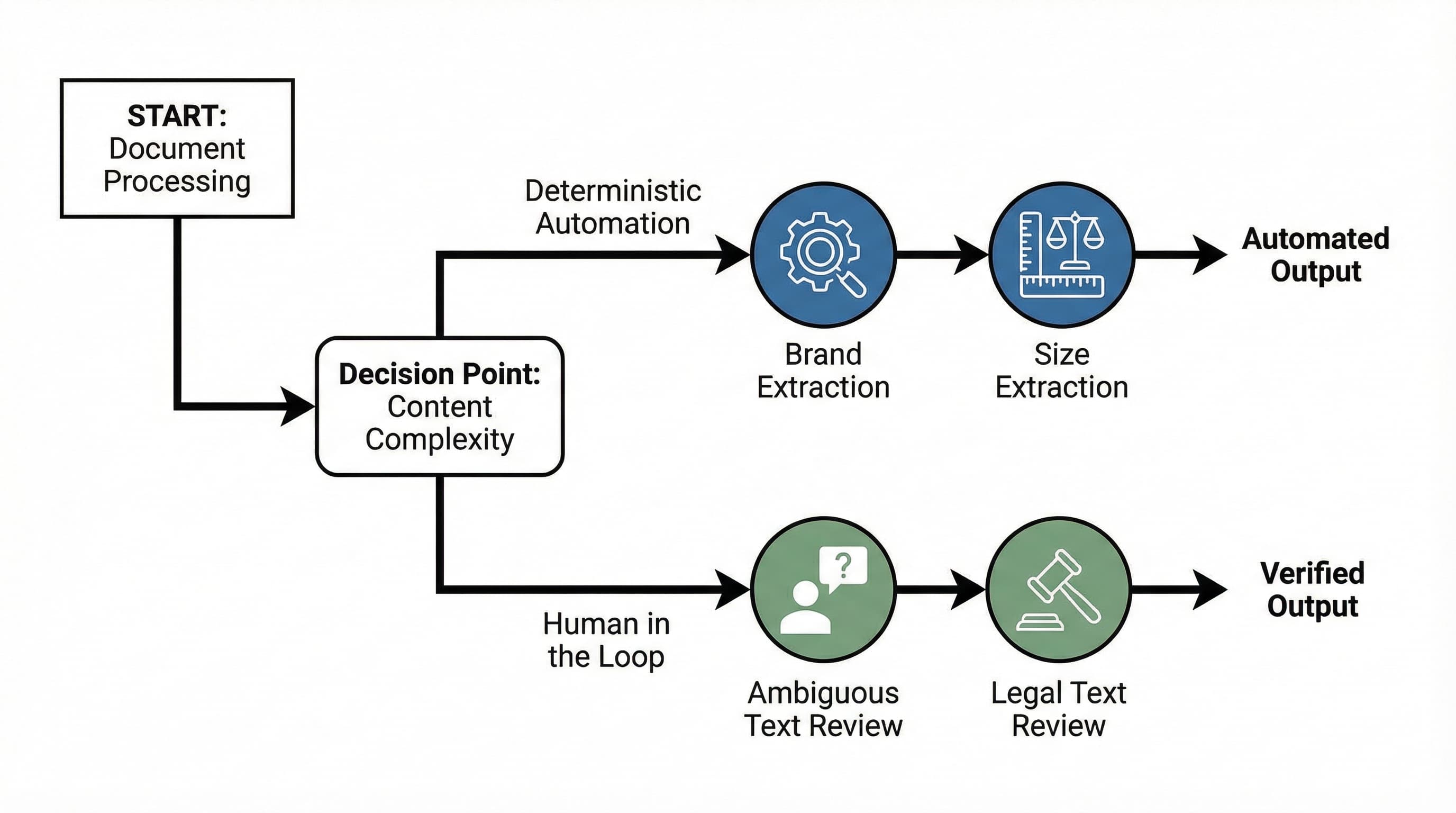
Teams should automate fields that are consistent, structured, and high-impact—such as brand, GTIN, color, size, and basic material. Use ML models or rule-based parsers to extract these fields at scale and map them directly to your PIM taxonomy.
If source description contains pattern [100% Cotton] then set Material attribute = Cotton.HITL matters deeply when attribute meaning is ambiguous or when the content affects legal claims, safety, or brand voice. Have humans validate AI suggestions for pricing claims, warranty text, safety instructions, and high-conversion commercial descriptions.
Practical tip: Use confidence thresholds and sampling to limit the cognitive load on your human reviewers. Keep strict audit logs to measure and correct AI drift over time.
Managing a KPI-weighted scorecard and running weekly optimization sprints manually across thousands of SKUs can quickly overwhelm digital and data teams. ButterflAI automates the extraction, normalization, and scoring of product data so you can focus on strategy rather than spreadsheet mapping, ensuring your catalog is always optimized for maximum revenue.
Quick answers to common questions.
A practical QA scorecard and weekly workflow to prevent Merchant Center disapprovals, optimize your product data, and scale catalog growth.
Mar 4, 2026

Discover how to measure data quality in your ecommerce catalog using the 6 core dimensions, channel-specific scorecards, and continuous remediation loops.
Feb 26, 2026

Stop guessing with basic Etsy SEO tips. Map your catalog data to Etsy attributes, automate descriptions, and scale your listing optimization strategy systematically.
Feb 25, 2026
